
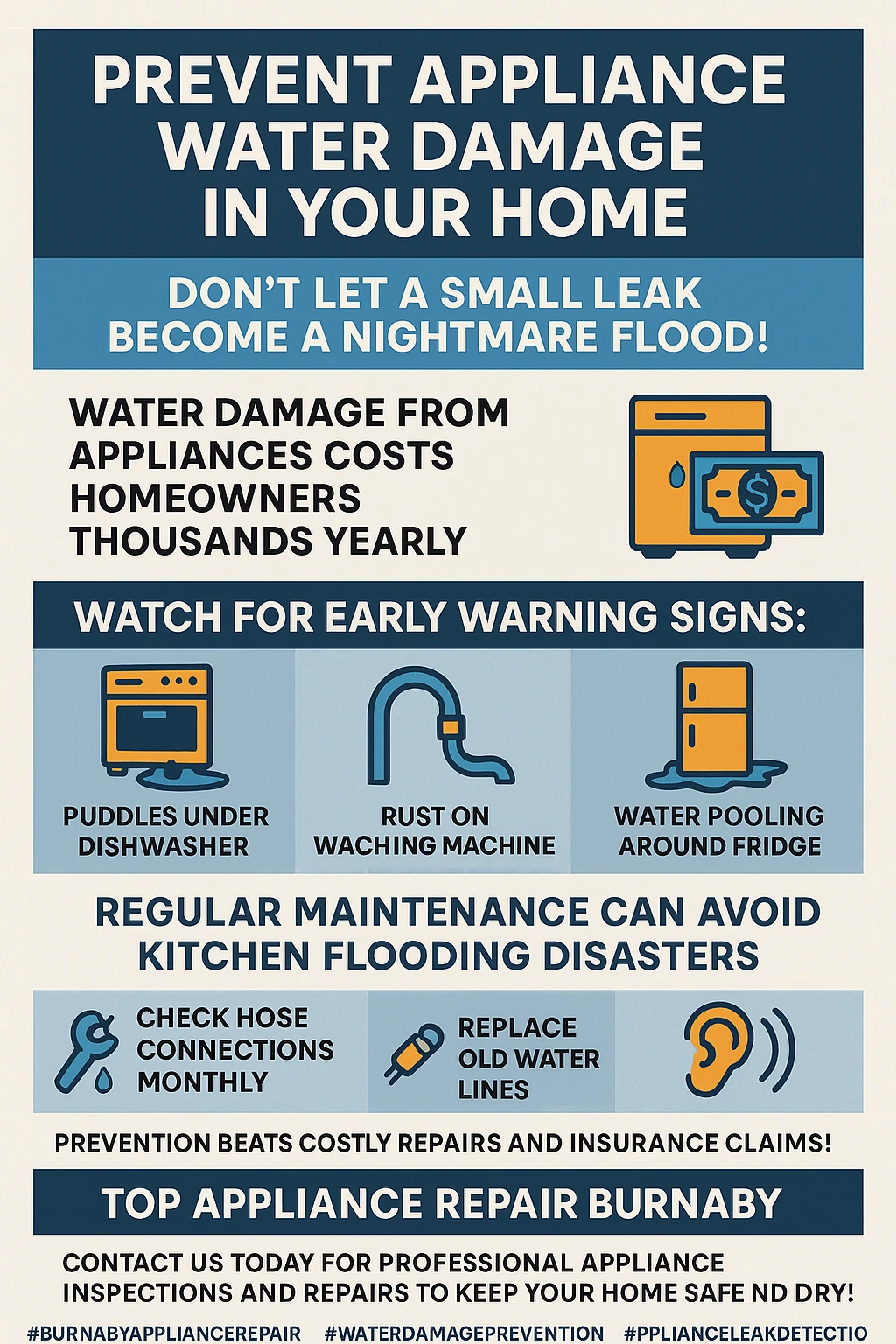
Tired of worrying about your dishwasher turning your kitchen into an indoor swimming pool? Discover the essential prevention strategies that can save Burnaby homeowners thousands of dollars in water damage repairs while protecting your home from costly appliance failures. Picture this: you’re enjoying a quiet Sunday morning when you hear the unmistakable sound of water where it shouldn’t be. Your washing machine has decided to stage its own version of Niagara Falls, and now you’re scrambling to save your hardwood floors from turning into a soggy mess. If you’re a Burnaby homeowner, this nightmare scenario is more common than you might think, especially given our coastal climate that loves to mess with our appliances. Water damage from household appliances affects 1 in 60 homes annually, with claims averaging over $11,000 per incident. In Burnaby’s humid coastal environment, where salt air and hard water conditions accelerate appliance wear, the risks are even higher. The good news? Most appliance-related flooding is completely preventable with the right knowledge and proactive approach. Smart prevention isn’t just about avoiding a mess – it’s about protecting your biggest investment. Between our region’s unique climate challenges and the rising costs of professional restoration services, understanding how to prevent appliance water damage has become essential for every Burnaby homeowner who wants to keep their kitchen dry and their wallet happy.
Key Outtakes:
- Water damage from appliances costs homeowners an average of $11,000 per incident, making prevention far more cost-effective than repairs
- Early detection through visual inspections and leak sensors can prevent minor drips from becoming major floods that cause structural damage
- Regular maintenance of hoses, seals, and connections every 6 months significantly reduces the risk of sudden appliance failures
- Burnaby’s coastal climate and hard water conditions accelerate appliance wear, requiring more frequent inspections than other regions
- Most homeowners insurance covers sudden appliance leaks but excludes gradual damage from poor maintenance, making prevention essential for coverage
Understanding Your Home’s Hidden Water Damage Risks
Let’s talk about the elephant in the room – or should I say, the potential flood in your kitchen. Every major appliance in your home that uses water is basically a ticking time bomb if you don’t treat it with the respect it deserves. Your washing machine, dishwasher, refrigerator with ice maker, and water heater are all capable of turning your cozy home into a water park faster than you can say “insurance claim.” Here’s the kicker: Burnaby homeowners face unique challenges that make appliance water damage even more likely. Our coastal humidity doesn’t just make your hair frizzy – it’s actively corroding the metal components in your appliances. That salty sea air that makes our sunsets so gorgeous? It’s also eating away at your dishwasher’s seals and your washing machine’s connections. Add in the hard water conditions common throughout the Vancouver area, and you’ve got a perfect storm for appliance failures. The statistics are pretty sobering when you dig into them. Water damage accounts for 24% of all homeowner insurance claims, and with appliances being responsible for a significant chunk of those incidents, you’re looking at some serious financial exposure. But here’s what really gets me – most of this damage happens gradually, with small leaks that go unnoticed until they’ve caused thousands of dollars in damage to your flooring, cabinets, and structural elements.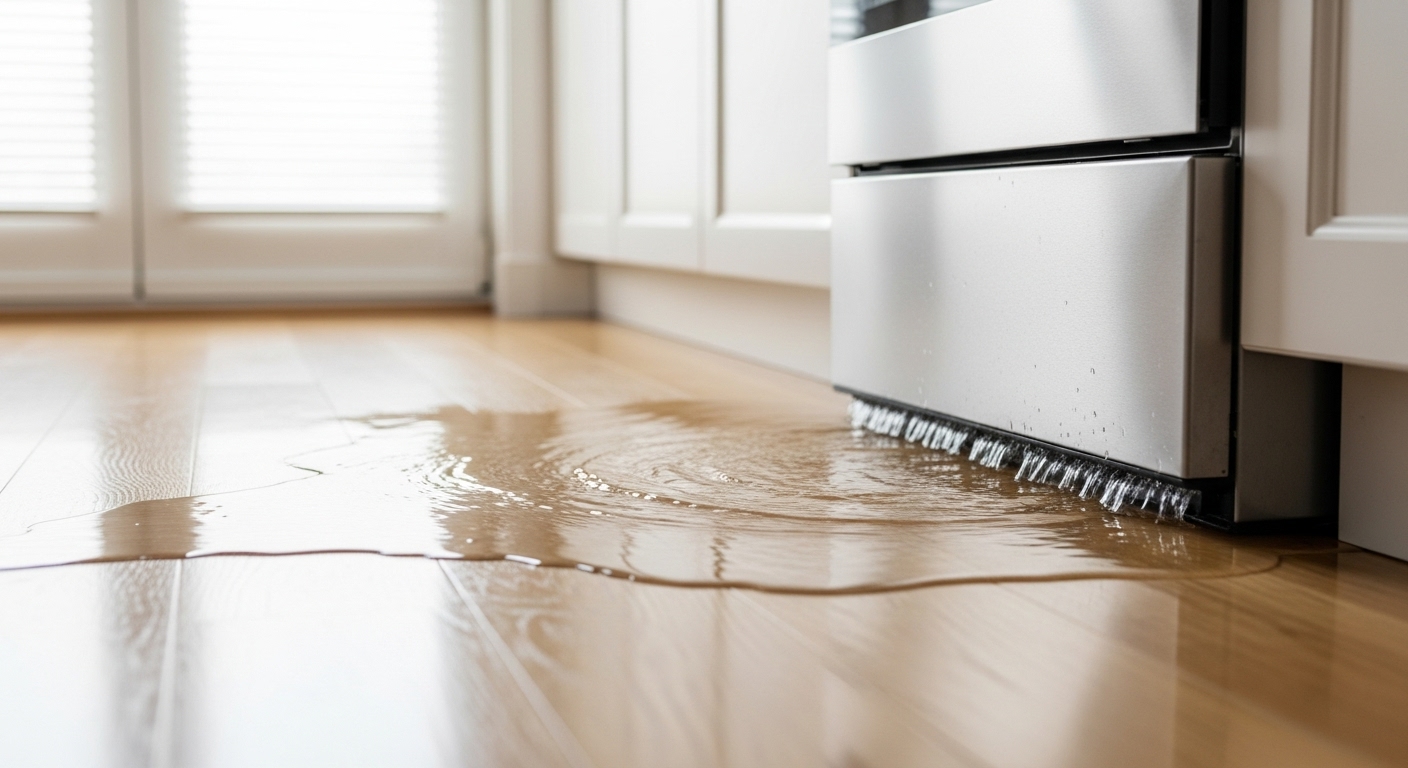
Spotting Trouble Before It Becomes a Disaster
Building on those sobering statistics, the key to avoiding becoming another water damage casualty lies in developing a keen eye for the early warning signs that your appliances are plotting against you. Think of yourself as a detective, but instead of solving crimes, you’re preventing your kitchen from becoming a crime scene of soggy destruction. The most obvious red flag is water where it shouldn’t be. I’m talking about those mysterious puddles that appear around your washing machine or dishwasher. Don’t ignore them or assume they’ll just dry up and disappear – they’re your appliance’s way of crying for help. Even tiny droplets can indicate seal failures or loose connections that will only get worse over time. Your nose can be one of your best tools in this detective work. That musty smell near your appliances isn’t just “that appliance smell” – it’s often the first sign of moisture buildup that could lead to mold growth within 24 to 48 hours. Trust me, you don’t want to deal with mold remediation on top of water damage restoration. Visual inspection should become second nature. Look for rust spots on your dishwasher components, which scream “internal leaking.” Check for warped or discolored flooring around your appliances – wood doesn’t lie, and if it’s changing color or shape, water is definitely involved. Damp cabinets under your kitchen sink or around your dishwasher are another dead giveaway that moisture is going where it shouldn’t. 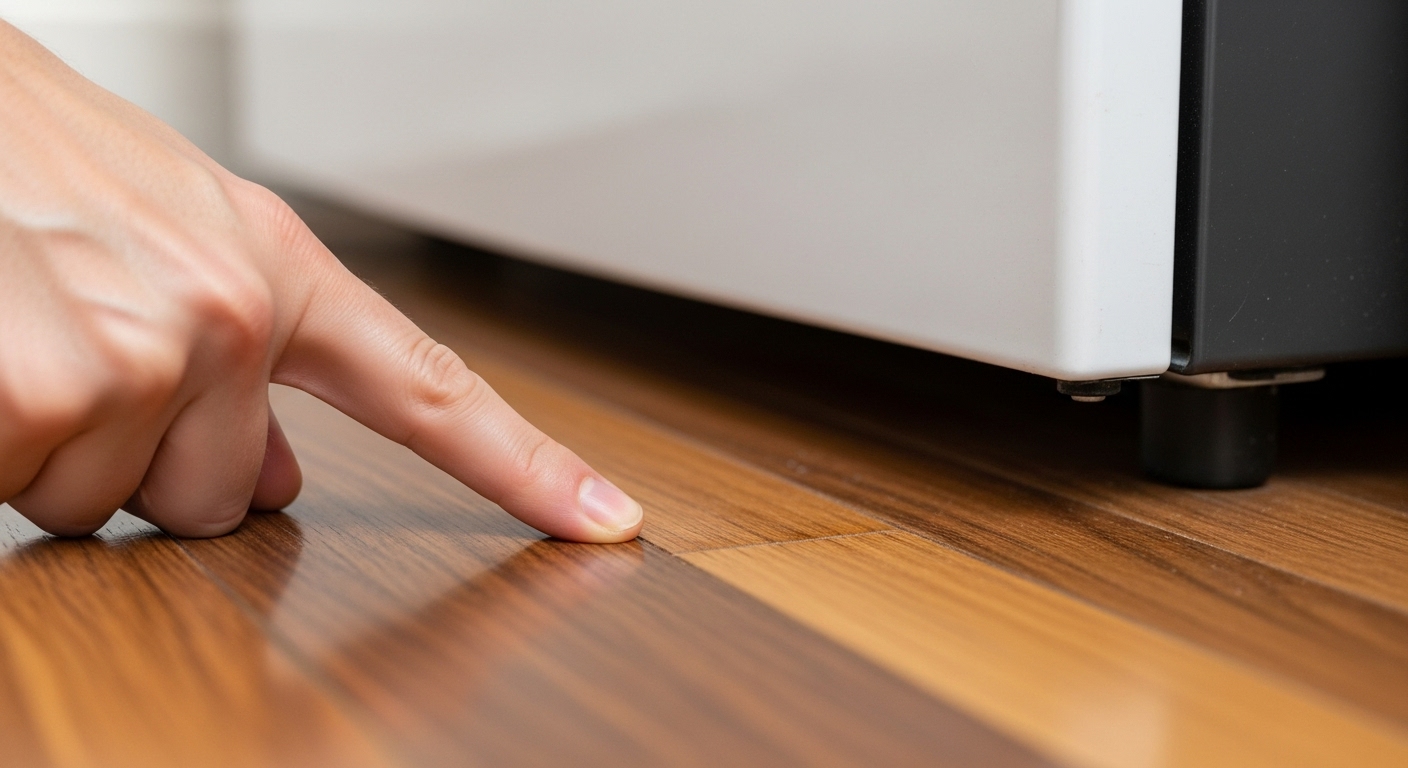 Don’t rely solely on your eyes and nose, though. Modern technology has given us amazing tools like water leak sensors that can detect moisture and send notifications straight to your smartphone. These little gadgets emit 85-decibel alarms when water is detected – loud enough to wake you up if a leak starts in the middle of the night. Some advanced systems even integrate with your home’s WiFi network, allowing you to monitor your appliances remotely.
Building Your Appliance Defense Strategy
Now that you’ve mastered the art of early detection, it’s time to get proactive about prevention. Each appliance in your home has its own personality and specific failure points, which means your maintenance strategy needs to be just as personalized as your Netflix recommendations. Let’s start with your washing machine, which is basically the heavyweight champion of household flooding. Those rubber hoses carrying water to and from your machine are under constant pressure, and they’re particularly vulnerable in our climate. The golden rule here is replacement every 3 to 5 years, but honestly, given Burnaby’s conditions, I’d lean toward the shorter end of that range. When you do replace them, upgrade to braided stainless steel hoses – they cost more upfront but will save you thousands in potential water damage. 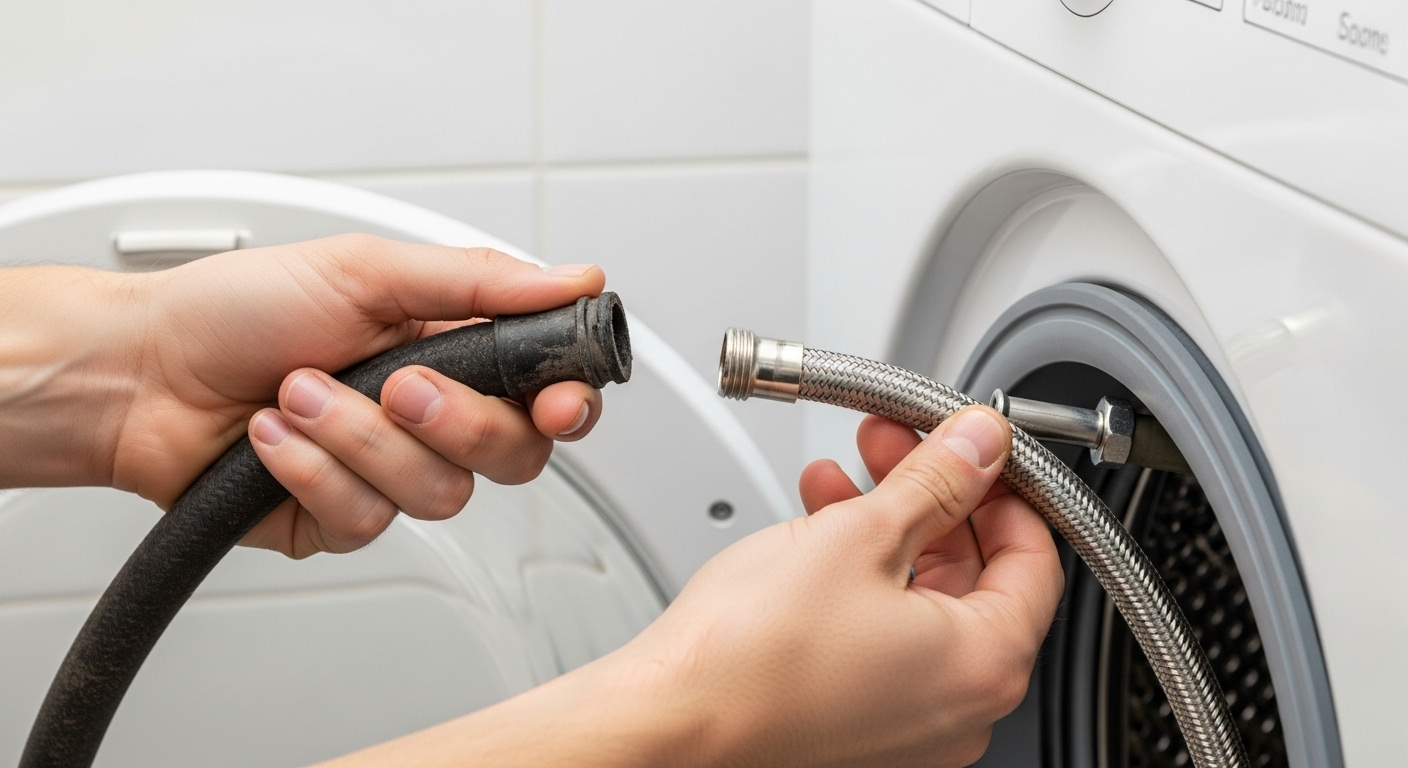 Front-loading washers deserve special attention because their door seals are magnets for soap scum and debris. Clean these regularly and check for cracks or tears. Also, make sure your machine is properly leveled – an unlevel washer can develop drainage issues that lead to leaks. Installing automatic shutoff valves might seem like overkill, but they’re your insurance policy against catastrophic flooding. Your dishwasher requires a different approach entirely. Those door gaskets and seals are constantly exposed to hot water and harsh detergents, making them prone to deterioration. Inspect them monthly for cracks, tears, or hardening. Check the inlet and drain hoses for signs of wear, and don’t forget about proper leveling – a tilted dishwasher can pool water in all the wrong places. The refrigerator with ice maker might seem innocent, but it’s responsible for some sneaky water damage. Those thin water supply lines are often forgotten until they fail spectacularly. Replace them every six months and upgrade to braided stainless steel when possible. Clean the drain pan regularly and inspect it for cracks. Here’s a pro tip: when moving or servicing your refrigerator, always check those ice maker and water dispenser connections – they’re easily disturbed and often not properly reconnected. For water heaters, the key is understanding that most failures happen around year 12, with 75% of them related to mineral buildup from our hard water. Regular descaling and professional maintenance can extend the life significantly. Check for loose valves, signs of tank corrosion, and any moisture around the base – these are all early warning signs that shouldn’t be ignored.
Adapting to Burnaby’s Unique Climate Challenges
Moving beyond general appliance maintenance, Burnaby homeowners need to acknowledge that our beautiful coastal location comes with specific challenges that most generic maintenance advice doesn’t address. Our climate isn’t just different – it’s actively working against our appliances in ways that require specialized strategies. The high humidity levels we experience year-round don’t just make summer days feel stickier – they’re accelerating the corrosion of metal components throughout your appliances. This means that maintenance schedules designed for drier climates simply don’t apply here. Where other regions might recommend annual inspections, we need to be thinking in terms of every six months, with monthly visual checks becoming routine. Temperature fluctuations, particularly during our mild winters and warm summers, create expansion and contraction cycles that stress seals and connections. This is why appliance failures often spike during seasonal transitions. Your prevention strategy should include pre-season inspections – checking everything before winter kicks in and again as we transition to summer. The hard water conditions throughout Greater Vancouver create another layer of complexity. Scale buildup doesn’t just reduce efficiency; it actively damages heating elements, pumps, and internal components. This is particularly problematic