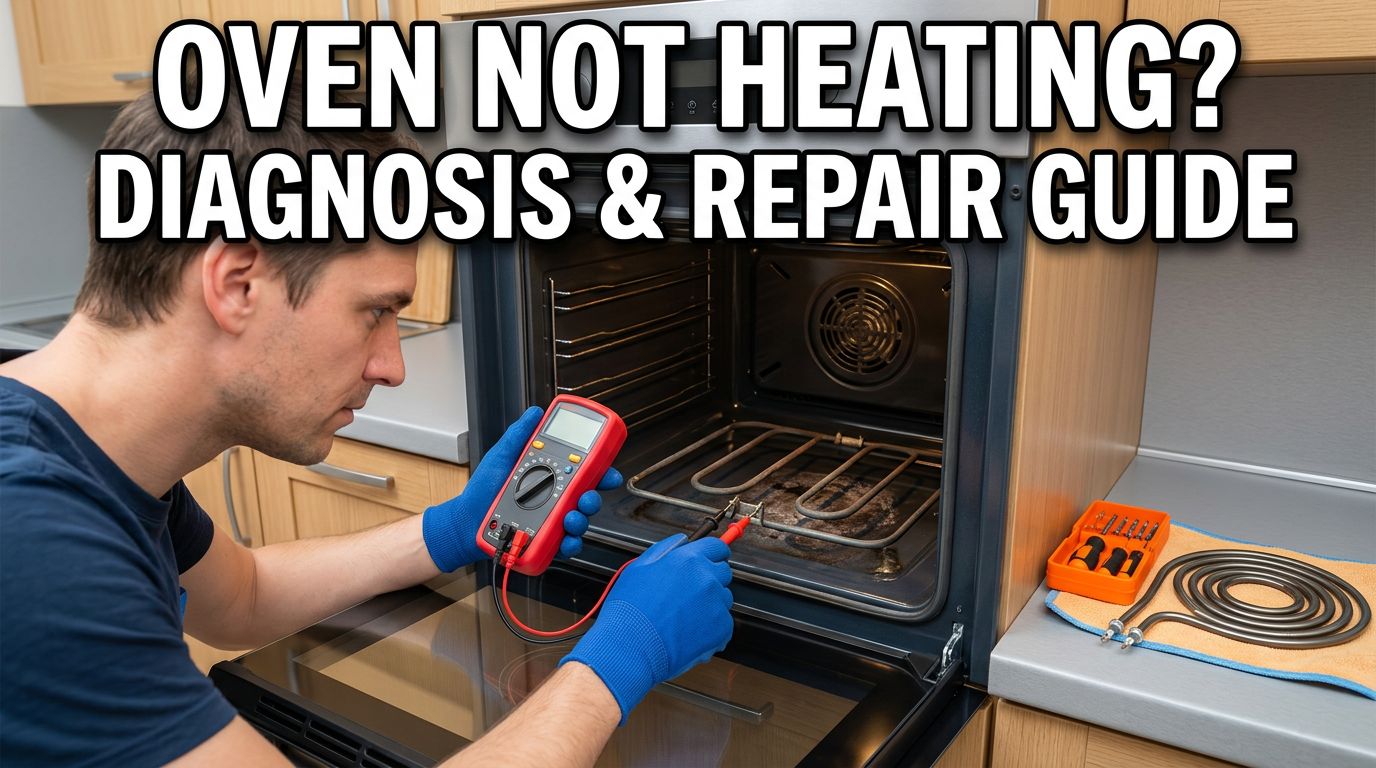
Your oven was set to 450°F for two hours and the inside felt barely warm to the touch. That’s not a minor glitch, that’s a real problem that needs sorting out before your next meal depends on it. This guide walks you through the most common reasons an oven stops heating properly, what you can check yourself, and when it’s time to call in a professional. Burnaby homes run the full range. Newer condos in Brentwood, older ranchers in South Slope, post-war houses that have seen a lot of kitchen appliances come and go. At Top Appliance Repair Burnaby, we hear about oven heating problems regularly, and the good news is that most of them trace back to a handful of causes. Some are simple enough to diagnose on a Saturday morning. Others genuinely need a technician. Knowing which is which saves you time, money, and a lot of frustration. The Pacific Northwest climate doesn’t do your appliances any favors either. Temperature swings, humidity, and homes that run their ovens hard through the long grey winters all add up to wear on components that most people don’t think about until something stops working.
Key takeaways
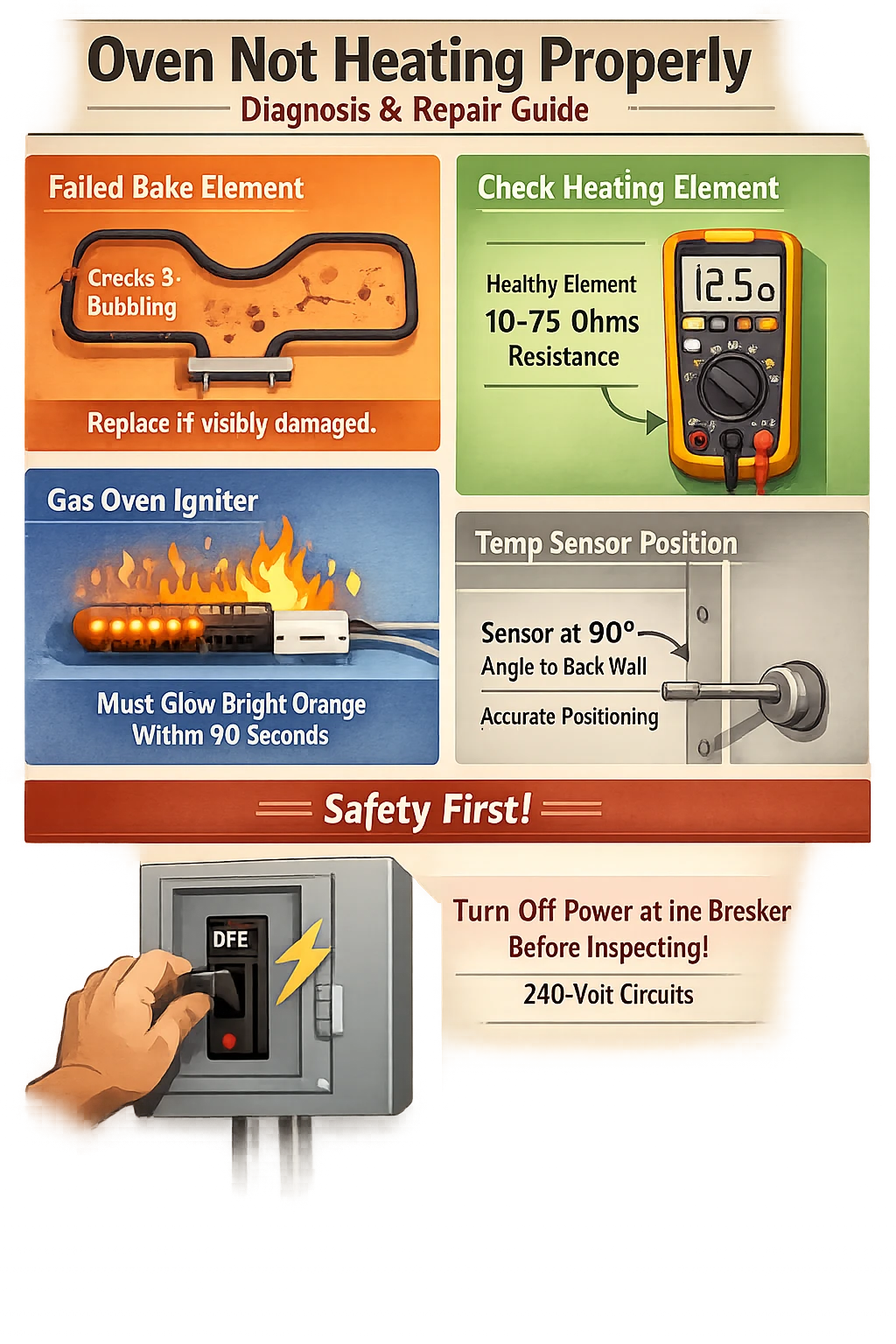
- A bake element that shows visible bubbling or cracks has almost certainly failed and needs to be replaced before your oven will heat properly again.
- A healthy electric oven heating element should read between 10 and 75 ohms of resistance on a multimeter. A reading outside that range points to a failed component.
- Gas ovens rely on an igniter that should glow bright orange within about 90 seconds of startup. If it glows weakly or not at all, that igniter is likely the culprit.
- The temperature sensor should sit at a 90-degree angle to the back wall of the oven. Even a slight bump out of position can cause wildly inaccurate temperature readings.
- If repairs cost more than roughly half the price of a comparable new oven and the appliance is over ten years old, replacement is often the smarter investment.
- Always cut power at the breaker before inspecting or replacing any oven component. Ovens run on 240-volt circuits, and that’s not something to be casual about.
Why your oven isn’t heating properly
The most common reason an electric oven stops heating is a failed bake element. That’s the curved heating component you see at the bottom of the oven cavity. When it’s working, it glows red-orange as the oven comes up to temperature. When it fails, you get nothing. Or, as one homeowner described it, the oven felt “warm, like a car that’s been sitting in the sun” rather than actually hot. Gas ovens follow a different failure path, almost always pointing toward a weak or broken igniter. Those two culprits, element failure in electric ovens and igniter failure in gas ovens, account for the majority of heating problems we see. But there’s a supporting cast of other causes worth knowing about, especially when the element and igniter both check out fine. A failed element usually announces itself. Look for visible bubbling on the surface, cracks, or spots where the outer casing has split open. If you see any of that, the diagnosis is pretty well made for you. If the element looks physically intact, you’ll want a multimeter to test resistance. A good element should show somewhere between 10 and 75 ohms. No reading at all means it’s done.
Checking the heating element in an electric oven
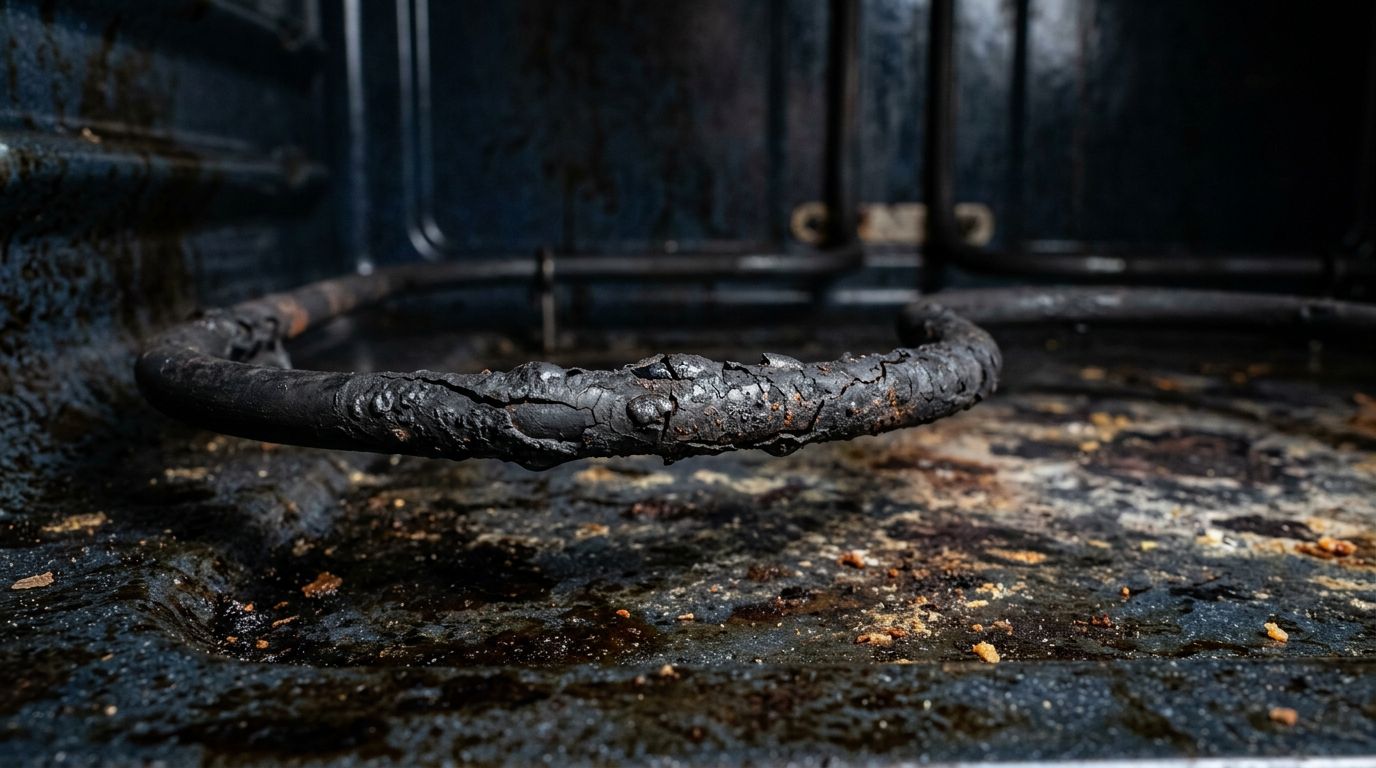 Most electric ovens have two elements: the bake element at the bottom and the broil element up top. The bake element handles most of the cooking, so it fails more often. When your oven isn’t getting hot enough but still produces some warmth, the element may be partially working. Enough to take the chill off but not enough to bake anything properly. Before you touch anything, cut power at the circuit breaker. Ovens operate on a 240-volt circuit, and that’s not something to take lightly. Once power is off, visually inspect the element. Bubbling, blistering, or any visible break in the surface tells you what you need to know. If you have a multimeter, disconnect the element from its terminal connectors and test resistance across the two terminals. That 10-75 ohm range is your target. Zero resistance, or no reading at all, confirms a dead element. One practical note: when you disconnect the element, be careful not to let the wires pull back into the wall cavity. If they disappear into the insulation, you’re looking at a much bigger job to retrieve them. Replacement elements are available through RepairClinic using your oven’s model number, and they’re generally not expensive. The repair itself is straightforward for most people who are comfortable with basic tools. That said, if you have any doubt about working around electrical components, this is a reasonable call to hand off to a technician.
What about the broil element?
If your oven bakes fine but broiling is the problem, the broil element at the top of the cavity is the likely suspect. Same inspection process applies. Look for visible damage, test resistance with a multimeter. Broil element failures are less common than bake element failures, but they happen.
Gas oven not getting hot — the igniter issue
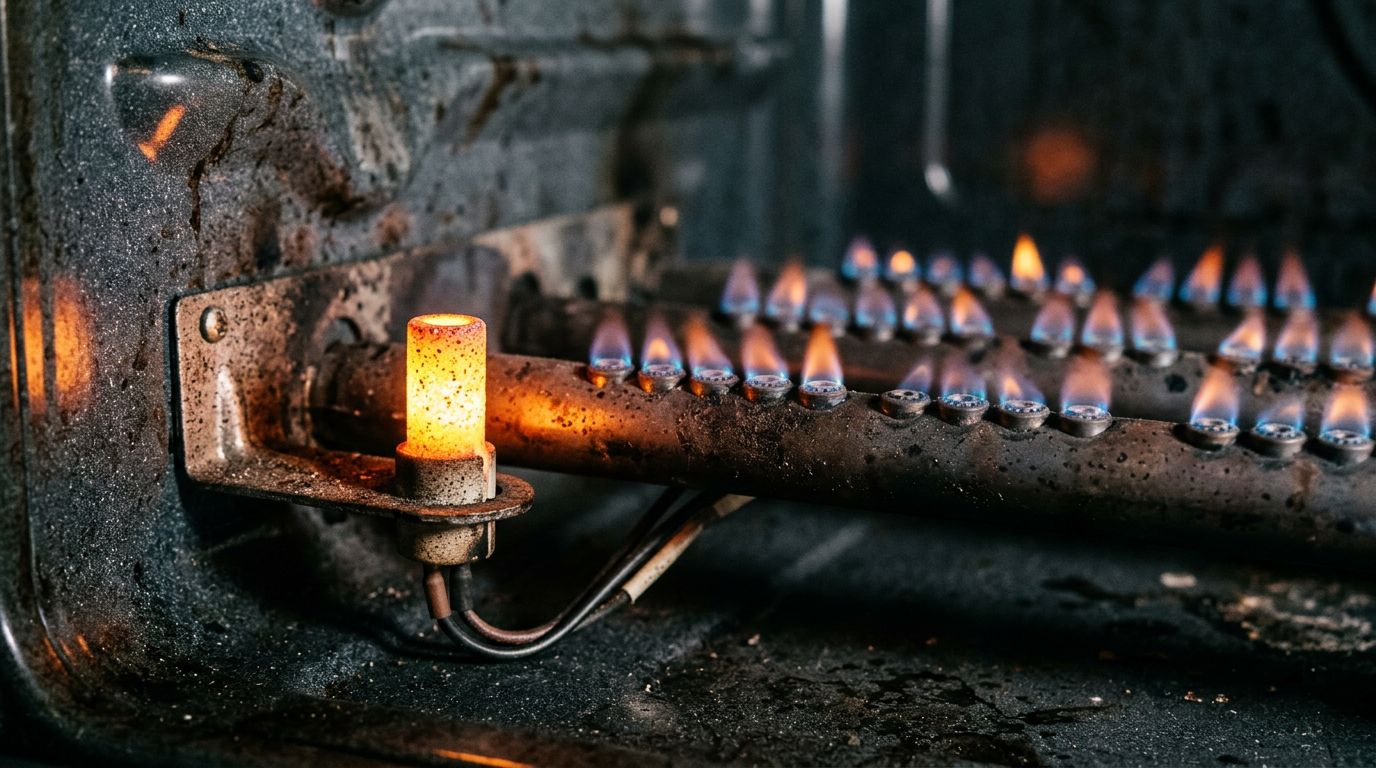 Gas ovens work differently. There’s no glowing element to inspect. Instead, a ceramic igniter heats up enough to ignite the gas flowing through the burner. When that igniter weakens or fails, the gas valve may not open fully, or at all, and the oven can’t reach temperature. Watch what happens when you turn the oven on. A functioning igniter should glow bright orange within about 90 seconds. If it glows dimly, takes longer, or doesn’t glow at all, that’s your answer. You might also notice the oven takes much longer to preheat, or produces an uneven flame before settling. Any of these signs points to an igniter that’s on its way out. Igniter replacement is a job many handy homeowners tackle themselves, but the gas connections in the system make it one where caution is warranted. If you’re not fully comfortable with the work, call someone who is. We see a fair number of calls from older homes in areas like Edmonds and Capitol Hill where gas ranges have been running for 15 or 20 years. Igniter wear at that age is completely normal. These parts don’t last forever. One important point: if your oven smells strongly of gas and the smell doesn’t clear within a few seconds of ignition, stop. Turn the oven off, open windows, get everyone out, and call your gas utility or emergency services from outside. A brief whiff of gas on startup is normal. A persistent smell is not.
Temperature sensor problems — the sneaky one
This one catches people off guard. The oven turns on, the element or igniter works, but the temperature is consistently wrong. Too low, too high, or all over the place. The temperature sensor is a thin tube, usually mounted in the back upper corner of the oven cavity. It monitors the internal temperature and tells the control board when to cycle the heat on or off. If that sensor gets bumped out of position, the readings go haywire. The oven may reach 300°F and think it’s already at 400°F, then cut the heat. Or the reverse. The sensor should sit at a 90-degree angle to the back wall. Check that first. It’s a free fix if repositioning solves the problem. If the sensor looks properly positioned, test it with a multimeter. Resistance should be around 1,100 ohms at room temperature. A reading far outside that suggests the sensor itself has failed and needs replacing. You can confirm your suspicions the low-tech way too: put an oven thermometer inside, set the oven to 350°F, and check the actual temperature after it signals that it’s preheated. A consistent gap of more than 25°F or 30°F points to either a sensor issue or a calibration problem. 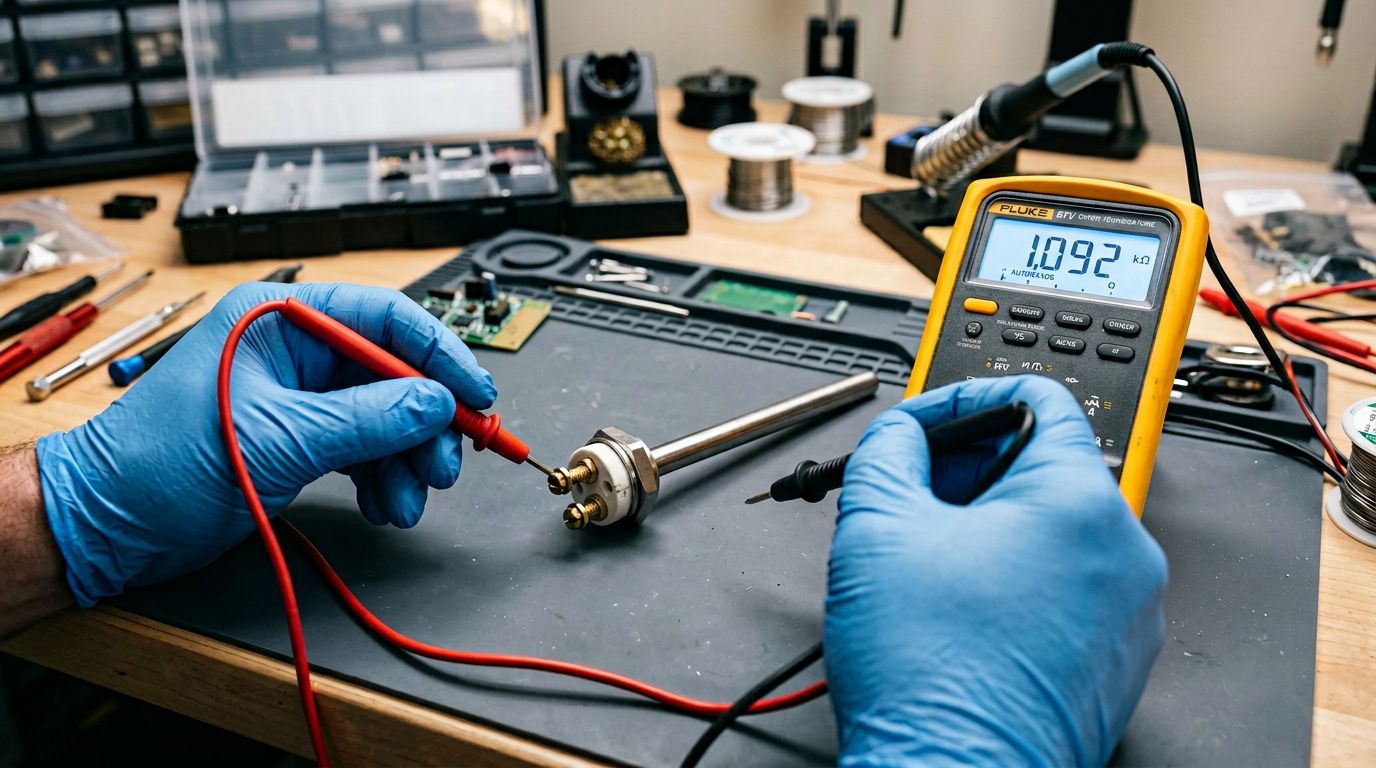 The U.S. Department of Energy’s appliance guidance notes that well-maintained appliances operate more efficiently. A misreading temperature sensor is quietly costing you energy every time you cook.
Calibration, door seals, and other fixable causes
Not every heating problem means a broken part. Sometimes the oven just needs recalibration. If your oven consistently runs 25-35 degrees cooler than the set temperature but all the components test fine, calibration is worth trying before you call anyone. Many modern ovens let you adjust the calibration through the control panel. A common method: press BAKE and BROIL simultaneously for about two seconds until the display shows “SF,” then use BAKE and the +/- buttons to adjust the temperature offset by up to 35 degrees in either direction. Press START to save. Your specific model may work differently, so check the manual for exact steps. A bad door seal is another one we see more often than people expect. The gasket around the oven door is designed to keep heat inside the cavity. Over time it can crack, compress, or pull away from the frame. Run your hand around the door edge while the oven is hot. If you feel heat escaping, the gasket needs attention. This is a cheap and easy fix that makes a real difference in how the oven performs. A tripped circuit breaker can also cause partial heating in electric ovens. If only one leg of the 240-volt circuit is live, the oven may heat weakly rather than not at all. Exactly the symptom that opened this article. Check your breaker panel and confirm the oven’s breaker is fully in the ON position, not stuck in the middle. Finally, locked control panels catch people off guard. Some ovens have a “Control Lock” or “Demo Mode” setting that limits oven function. If the display looks normal but nothing heats, check whether the control lock is engaged.
When to repair versus replace
Honestly, this is one of those decisions that depends more on age and repair cost than anything else. A bake element replacement on a relatively recent oven is almost always worth doing. Parts are inexpensive, the repair is straightforward, and the oven has plenty of life left. Same goes for an igniter swap or sensor replacement on a gas oven that’s less than ten years old. The math changes when the oven is older and the repair involves the control board or major electrical components. Control boards can cost $200-$400 or more for parts alone, and if the oven is already 12-15 years old, you’re putting real money into an appliance that may need another repair in a year. At that point, a new unit starts making more sense. A rough rule of thumb: if the repair cost exceeds half the price of a comparable replacement, think hard before committing. We handle this conversation regularly with homeowners across Burnaby. There’s no universal answer. It depends on the specific appliance, the repair involved, and how much life is realistically left in the machine.
Frequently asked questions
These are the questions that come up most often when people are trying to sort out why their oven isn’t heating right. The answers below should help you figure out whether this is something you can handle yourself or a situation that needs professional attention.
Why does my oven feel warm but won’t reach temperature?
An oven that heats partially but won’t reach the set temperature usually has a failing bake element, a weak igniter (in gas models), or a faulty temperature sensor. In electric ovens, sometimes only one leg of the 240-volt circuit is active. This can happen when a circuit breaker is partially tripped, and the oven produces some heat but nowhere near enough. Check your breaker first, then move on to inspecting the element or sensor.
My stove burners work fine but the oven won’t heat. What’s going on?
This is actually a very common pattern. The stove burners and the oven often operate on different components, so one can fail while the other keeps working. In an electric range, the surface burners run independently from the bake and broil elements. In a gas range, the stovetop ignition is separate from the oven igniter. The oven-specific components, element, igniter, temperature sensor, or thermal fuse, are the place to start looking.
Can I replace an oven heating element myself?
Yes, with some caveats. The physical replacement is not complicated. It typically involves removing a few screws, disconnecting the terminal connectors, and reversing the process with the new part. The important steps are cutting power at the breaker first and being careful not to let the wires retract into the wall cavity when you remove the old element. If you’re not comfortable working around electrical components or can’t confidently confirm the power is off, leave it to a technician. The repair cost for a simple element swap is generally quite reasonable.
How do I know if my oven temperature sensor is bad?
Test it with a multimeter. A properly functioning sensor should read around 1,100 ohms at room temperature. If the reading is way off, or if there’s no continuity at all, the sensor has failed. You can also do a simpler check: place a reliable oven thermometer inside, set the oven to 350°F, and compare the actual temperature once it signals that preheating is done. A consistent 25-35 degree gap points to a sensor issue or a calibration problem. A much larger gap, or wildly fluctuating readings, suggests the sensor itself is faulty.
Is a gas leak dangerous if I smell gas when starting my oven?
A brief, faint smell of gas for a few seconds after lighting a gas oven is normal. It’s the odorant added to natural gas, and it clears quickly once the burner ignites. What’s not normal is a persistent or strong smell that doesn’t go away after the oven starts. If you smell gas and can’t identify a harmless cause, turn off the oven, open windows, leave the house, and call your gas utility from outside. Don’t turn lights on or off, don’t use your phone inside, and don’t try to locate the leak yourself. This isn’t a DIY situation.
Wrapping up
Most oven heating problems come down to a failed element, a weak igniter, a mispositioned temperature sensor, or something as simple as a tripped breaker. Start with the basics before assuming the worst. Check the breaker, look at the element or igniter, confirm the sensor is where it should be. A lot of these repairs are within reach of a homeowner who’s comfortable with simple tools and careful about cutting power first. That said, anything involving gas lines, high-voltage wiring, or a control board is worth handing off to someone with the right equipment and experience. If you’d rather not troubleshoot this yourself, or if you’ve worked through the steps above and still can’t pin down the problem, Top Appliance Repair Burnaby handles oven and range repairs across Burnaby and the surrounding area. Give us a call and we’ll help you figure out what’s going on and what it will take to fix it.