
Wondering when to finally say goodbye to that aging dishwasher or whether your 10-year-old fridge has more years left in the tank? Understanding appliance lifespans isn’t just about planning for replacements – it’s about making smart financial decisions that could save Burnaby homeowners thousands of dollars in the long run!
Let’s be honest – figuring out how long your appliances should actually last feels like trying to crack some secret code that manufacturers definitely don’t want you to understand. One day your washing machine is humming along perfectly, and the next it’s making sounds like a freight train going through your laundry room. The truth is, modern appliances are completely different beasts than what our grandparents dealt with, and knowing what to expect can be the difference between getting caught off guard by a sudden breakdown or planning ahead like the savvy homeowner you are.
Here’s what really gets me fired up about this whole topic – appliance lifespans have actually gotten shorter over the past couple of decades, but not for the reasons you might think. We’re talking about a perfect storm of increased complexity, energy efficiency requirements, and our own desire for cooler features that has fundamentally changed how long these machines last. Understanding these changes helps you make better decisions about repairs versus replacements, especially when you’re dealing with the unique challenges that come with living in areas like Metrotown, Brentwood, or New Westminster.
Key Outtakes:
- Most modern appliances last between 8-16 years, with refrigerators and ranges typically lasting the longest at 10-23 years
- Simple, basic models without fancy features tend to outlast their high-tech counterparts because fewer components mean fewer failure points
- Regular maintenance can significantly extend your appliance’s lifespan by 3-5 years beyond manufacturer expectations
- The “50% rule” applies: if repair costs exceed 50% of replacement value, it’s usually time to buy new
- Higher-end appliances don’t automatically last longer, but commercial-grade models often do
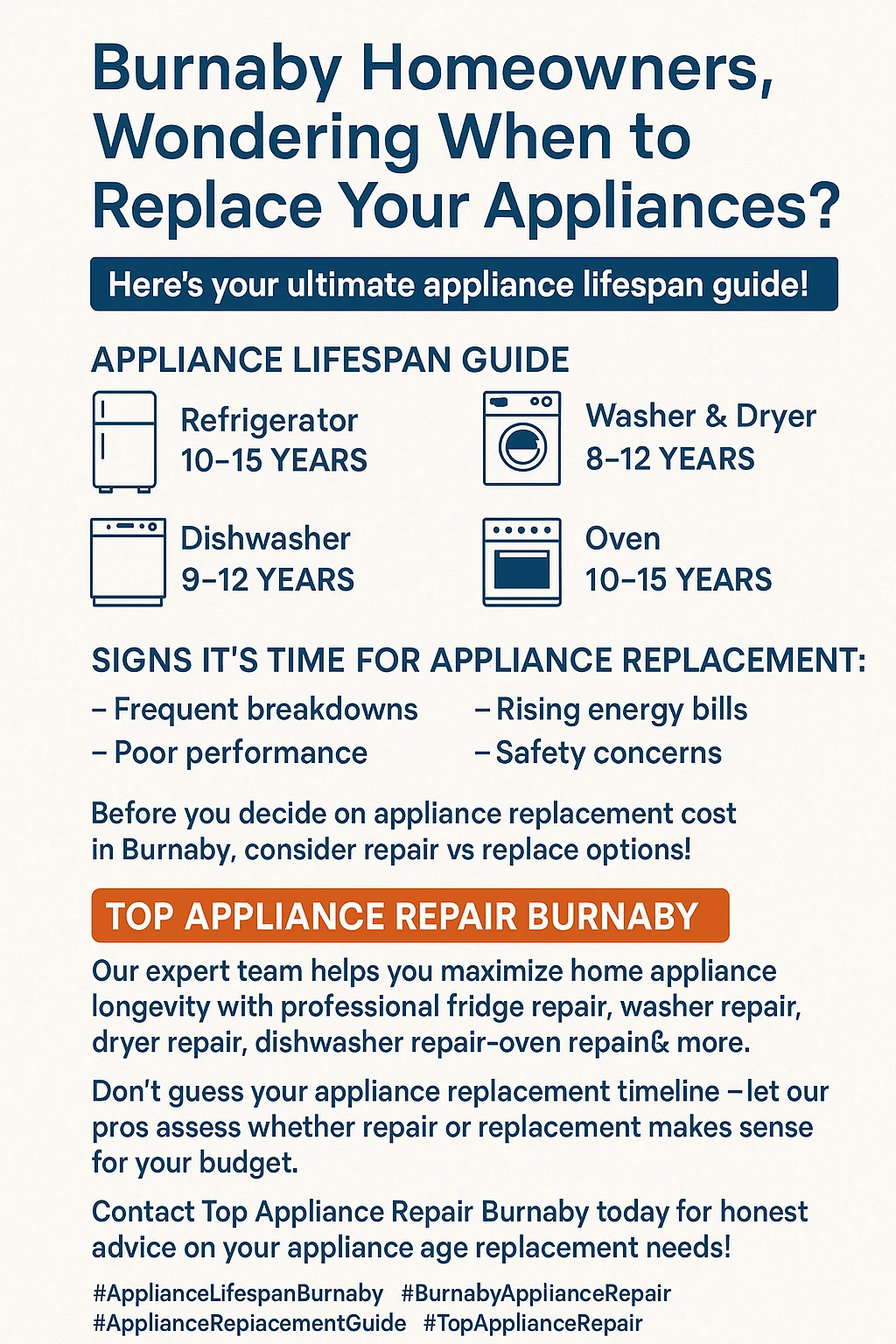
Understanding Modern Appliance Lifespans
Here’s where things get interesting and maybe a little frustrating – the whole “they don’t make them like they used to” thing is actually backed up by real data, but it’s not as dramatic as your uncle’s stories about his 40-year-old avocado refrigerator might suggest. According to industry research, appliance lifespans have decreased modestly over the past few decades, dropping from roughly 11-16 years in 2010 to 9-14 years by 2019 for most major appliances. While that might sound alarming, the reality is more nuanced than simple planned obsolescence.
The real culprit behind shorter lifespans isn’t necessarily manufacturers trying to force you to buy new appliances every few years. It’s actually a perfect storm of increased complexity, energy efficiency regulations, and our own desire for cooler features that make life easier. Think about it – your grandmother’s washing machine had maybe three settings and a mechanical timer, while today’s washers have sensors that detect soil levels, multiple wash cycles for different fabric types, digital displays, and sometimes even WiFi connectivity that lets you start a load from your office.
What really blows my mind is how energy efficiency standards have inadvertently affected durability in ways most people never consider. Those regulations that make our appliances use less water and electricity have forced manufacturers to switch from simple analog components to complex digital systems. Your dishwasher now has computer algorithms that calculate exactly how much water to use based on soil sensors and load size, which is amazing for your BC Hydro bill but adds layers of complexity that didn’t exist in simpler times. Modern dishwashers might be more efficient, but they also have more sophisticated components that can fail.
Kitchen Appliance Lifespans
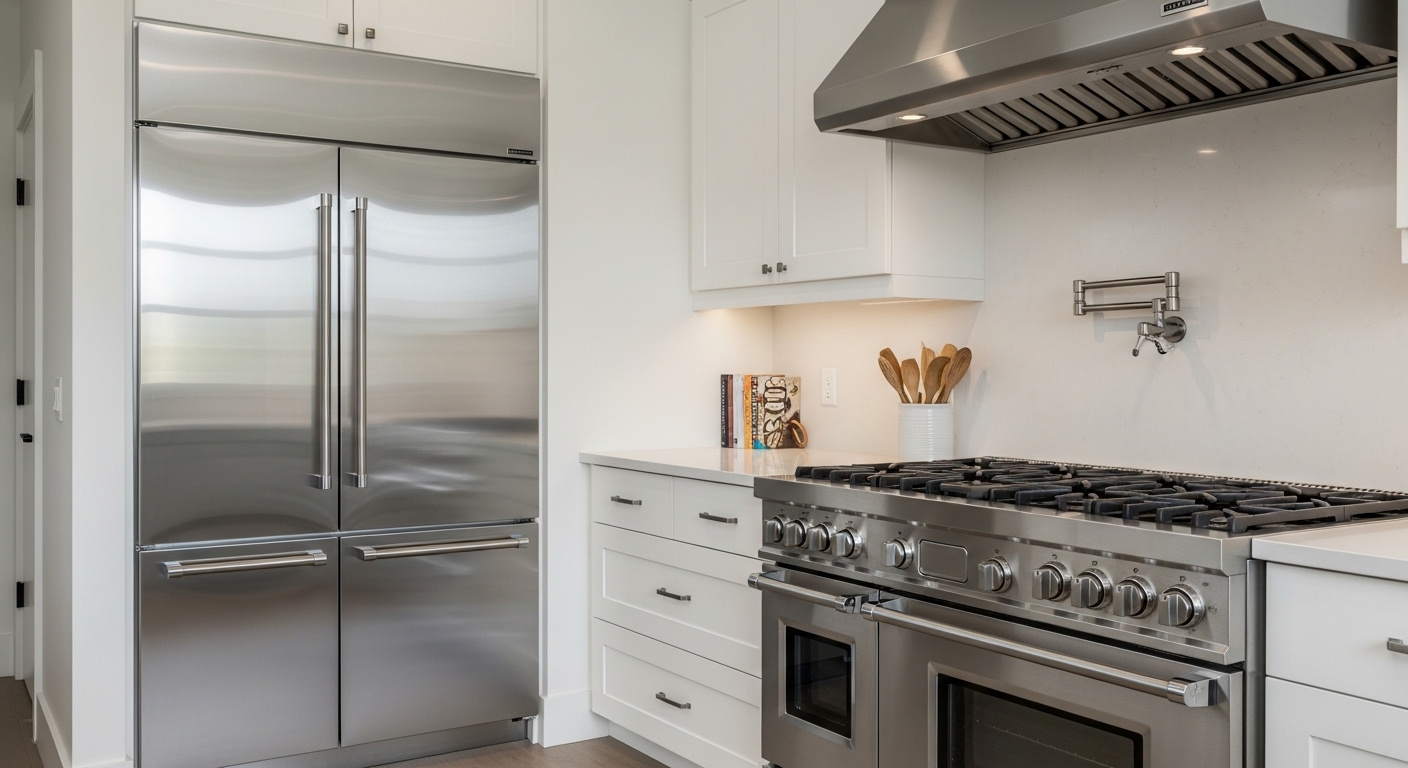
Moving from the big picture to the heart of your home, let’s dive into what you can realistically expect from the appliances that work hardest in your kitchen. Kitchen appliances generally fall into predictable lifespan categories, but usage patterns, maintenance habits, and environmental factors can dramatically affect these numbers. Understanding what to expect from each appliance helps you budget for replacements and recognize when it might be time to start shopping rather than continuing to repair.
Refrigerators
Your fridge is probably the hardest working appliance in your house, running 24/7 to keep your food fresh and safe. The good news is that refrigerators typically last between 10-18 years, with simpler top-freezer models often outlasting their fancy side-by-side or French door cousins by several years. The difference comes down to complexity – those convenient in-door ice makers and water dispensers might make life easier, but they’re also prime candidates for breakdown since they involve additional pumps, filters, and electrical components.
Ranges and Ovens
Ranges and ovens are generally the marathon runners of kitchen appliances, with gas models typically outlasting electric ones by a few years. Gas ranges can chug along for 15-23 years on average, while electric ranges usually last 13-20 years. The reason gas units tend to last longer is partly because they have fewer electronic components – it’s harder to mess up a simple gas valve than a complex electronic heating element control system with multiple temperature sensors and digital interfaces.
Dishwashers
Dishwashers are probably the most temperamental appliances in your kitchen, with lifespans typically ranging from 9-16 years depending heavily on water quality, usage patterns, and maintenance habits. Hard water is particularly brutal on dishwashers, causing mineral buildup that can clog spray arms, damage seals, and leave spots on your dishes that indicate internal problems.
Laundry Appliance Expectations
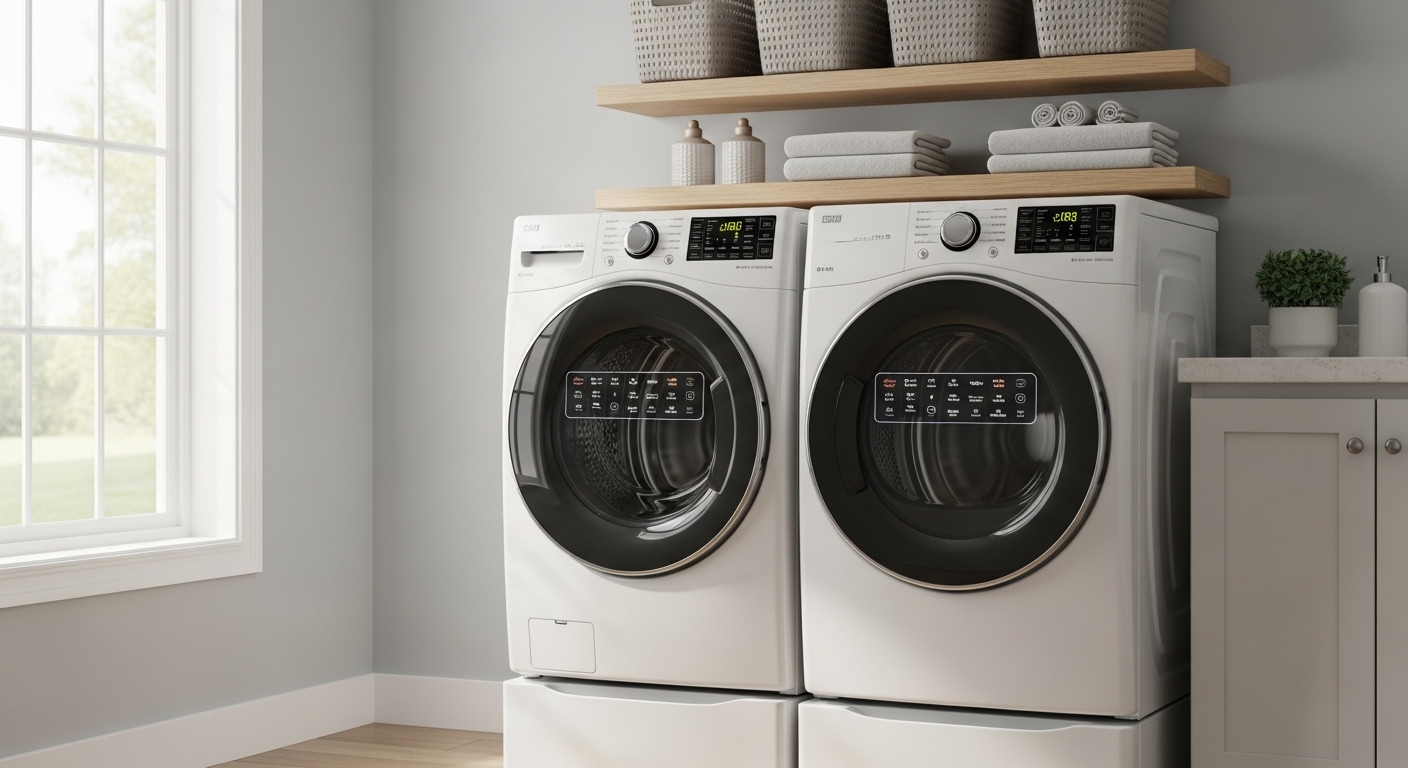
Transitioning from kitchen appliances to your laundry room, washing machines and dryers face their own unique set of challenges that affect longevity. These appliances deal with heavy loads, constant moisture, lint buildup, and mechanical stress that can vary dramatically based on family size and laundry habits.
Washing Machines
Washing machines typically last 8-16 years, with the variation largely depending on whether you have a top-loading or front-loading model, how frequently it’s used, and how well it’s maintained. Top-loading washers with agitators tend to be more mechanically robust and often last toward the longer end of this range, while high-efficiency front-loading models might require replacement closer to the 10-12 year mark.
Dryers
Dryers generally last 13-18 years, making them one of the more durable appliances in your home when properly maintained. Gas dryers often outlast electric models slightly because they heat up faster and run more efficiently, putting less stress on components over time. However, the single biggest factor affecting dryer lifespan isn’t the type of dryer but how well you manage lint buildup and ventilation.
When Burnaby’s Climate Affects Appliance Life
Burnaby’s high humidity levels, especially during our wet months from October through March, can reduce appliance lifespans by 10-20% compared to drier climates. When humidity levels fluctuate rapidly, appliances must work harder to maintain optimal operating conditions, and this extra stress accumulates over time.
The 50% Rule and Replacement Decisions
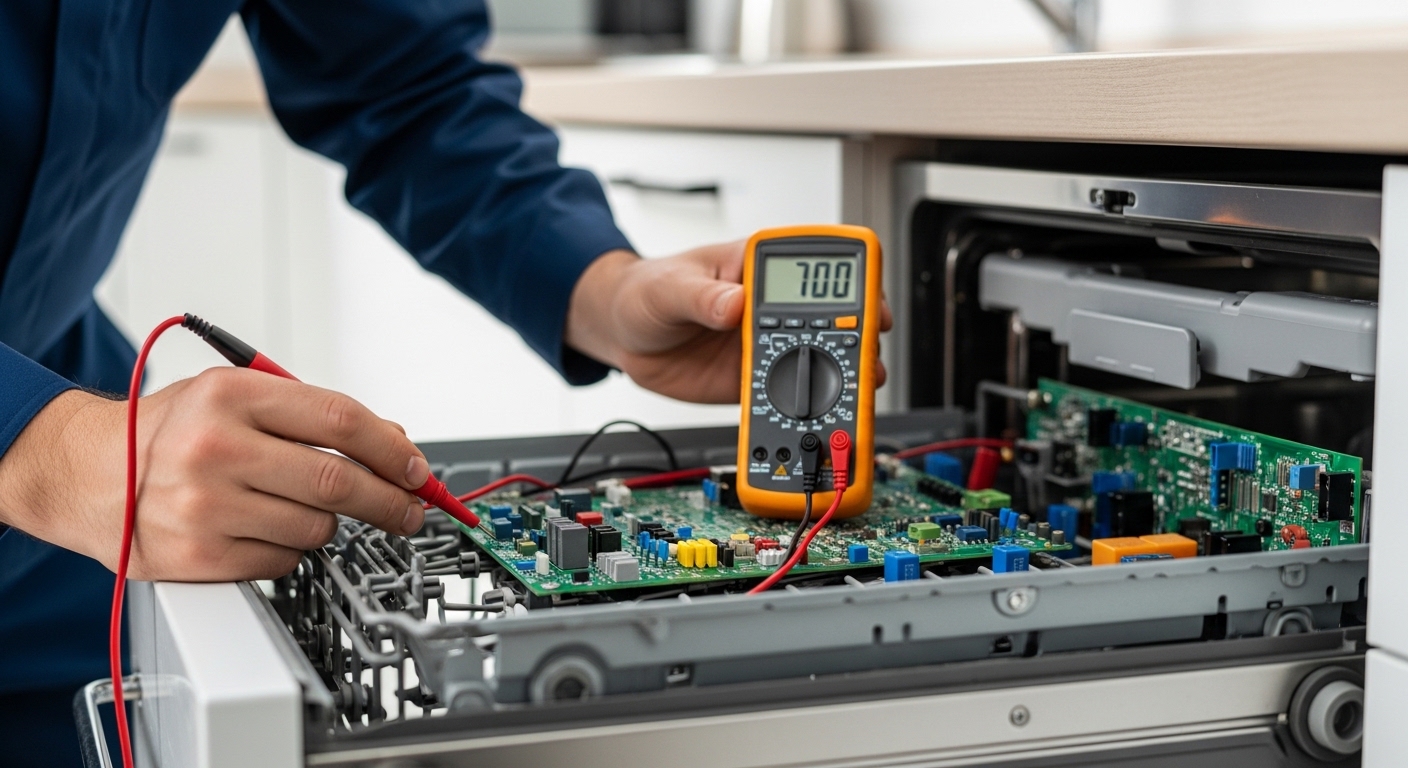
Moving from understanding lifespans to making practical decisions, the 50% rule provides a clear framework for determining when to repair versus replace aging appliances. This guideline suggests that if repair costs exceed 50% of the replacement cost for a new, similar appliance, you’re better off investing in a replacement rather than throwing good money after bad on an aging unit.
Frequently Asked Questions
How do I know when my refrigerator is about to die?
Key warning signs include inconsistent temperatures throughout different sections, excessive cycling on and off, unusual noises from the compressor, frost buildup in frost-free models, and higher than normal energy bills.
Should I repair a 10-year-old dishwasher or replace it?
For a 10-year-old dishwasher, consider both repair costs and the appliance’s overall condition. If repair costs are under $300 and you haven’t had multiple recent problems, repair might make sense. However, if you’re facing expensive repairs like pump or control board replacement, replacement is usually the better investment.
Wrapping Up
Understanding appliance lifespans isn’t just about knowing when to start shopping for replacements – it’s about making informed decisions that maximize your investment and minimize unexpected breakdowns. When your appliances do reach the end of their useful lives or need professional assessment, Top Appliance Repair Burnaby is here to help with honest diagnostics and quality repairs.