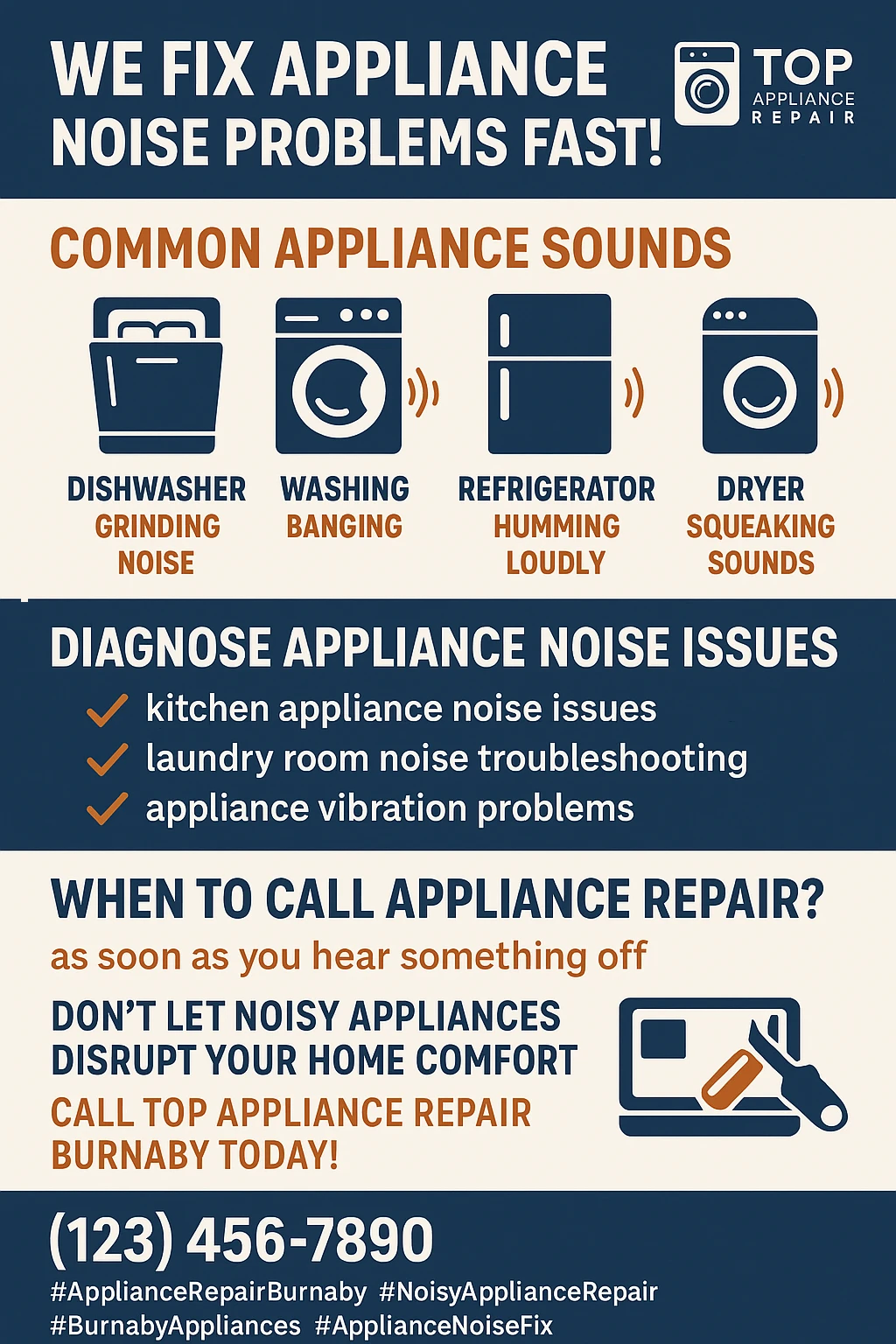
Hearing mysterious bangs, squeaks, and rumbles echoing through your Burnaby home? Let’s dive into the wild world of appliance noise troubleshooting and discover how to restore peace to your humble abode!
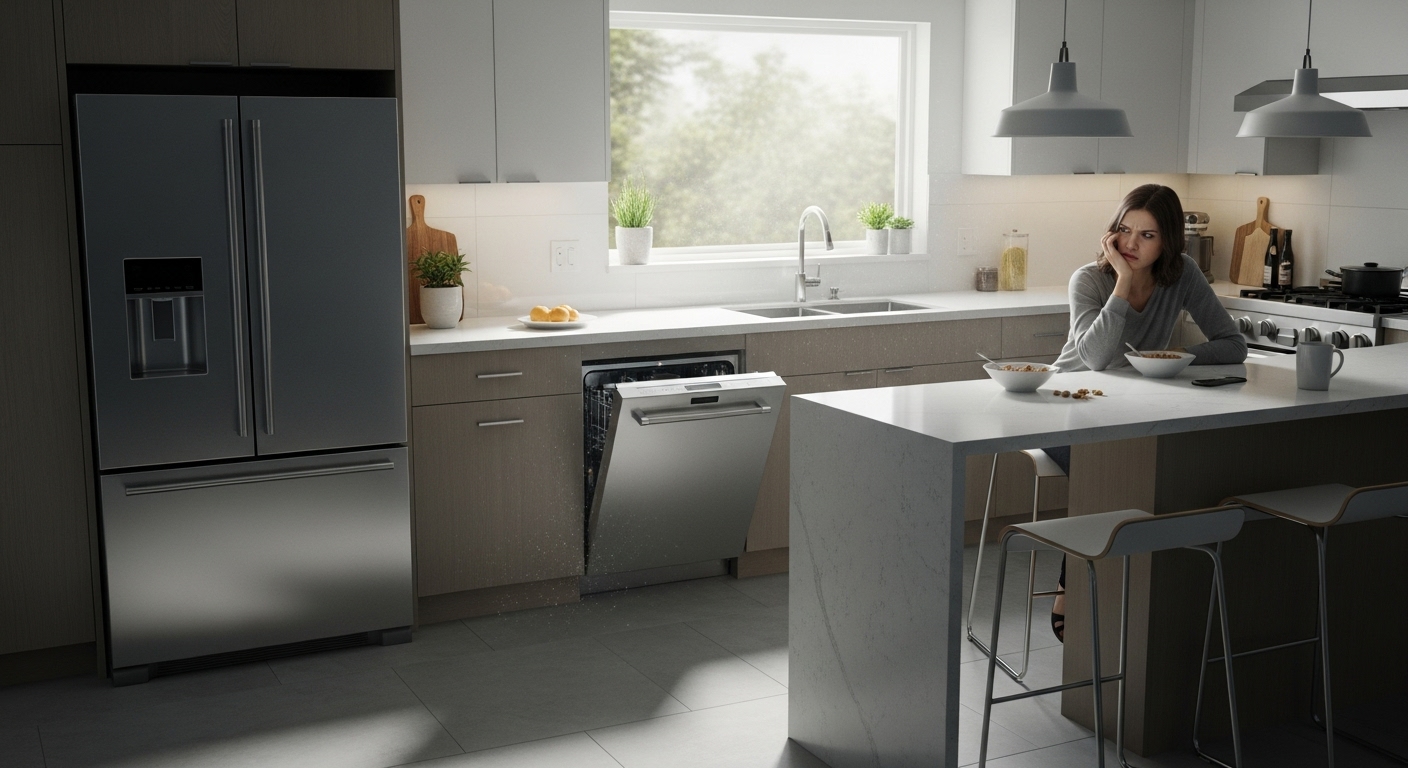
Picture this: you’re trying to enjoy a quiet Sunday morning when suddenly your washing machine sounds like it’s hosting a rock concert in your laundry room. Trust me, I’ve been there – clutching my coffee mug while my dishwasher decided to impersonate a freight train at 7 AM. Living in Burnaby, where many of us share walls with neighbors or have open-concept homes, appliance noise can quickly turn from a minor annoyance into a major headache.
The good news is that most appliance noises aren’t death sentences for your beloved machines. More often than not, they’re your appliances’ way of crying out for a little TLC or signaling that something simple needs attention.
Key Outtakes:
- Kitchen appliances typically produce the highest noise levels in your home, ranging from 40 to 90 decibels
- Most appliance noises can be diagnosed and often resolved with proper troubleshooting techniques
- Regular maintenance significantly reduces the likelihood of noisy appliance behavior
- Knowing when to call a professional can save you money and prevent further damage
- Simple solutions like door closure and positioning adjustments can dramatically reduce noise impact
Understanding Appliance Noise Levels in Your Burnaby Home
Let’s get real about what we’re dealing with when it comes to household noise pollution. According to research on household appliance acoustics, your kitchen is basically the Times Square of your home – and not in a good way. We’re talking noise levels that can range from a whisper-quiet 40 decibels all the way up to a whopping 90 decibels, which is roughly equivalent to standing next to a lawnmower.
What blew my mind when I first learned about this was discovering that some of our most-used appliances are actually the biggest noise offenders. Your trusty dishwasher, that food processor you use for Sunday meal prep, and even your refrigerator are all contributing to what experts call an acoustic environment that can seriously mess with your peace of mind. The World Health organization warns that exposure to noise exceeding 55 decibels can disturb sleep and cause stress, potentially leading to more serious health issues down the road.
Common Appliance Noises and Their Causes
Now that we’ve established that appliance noise is a legitimate concern for your wellbeing, let’s dive into detective mode and figure out what your machines are actually trying to tell you. Think of this as learning your appliances’ secret language – because honestly, that’s basically what troubleshooting is.
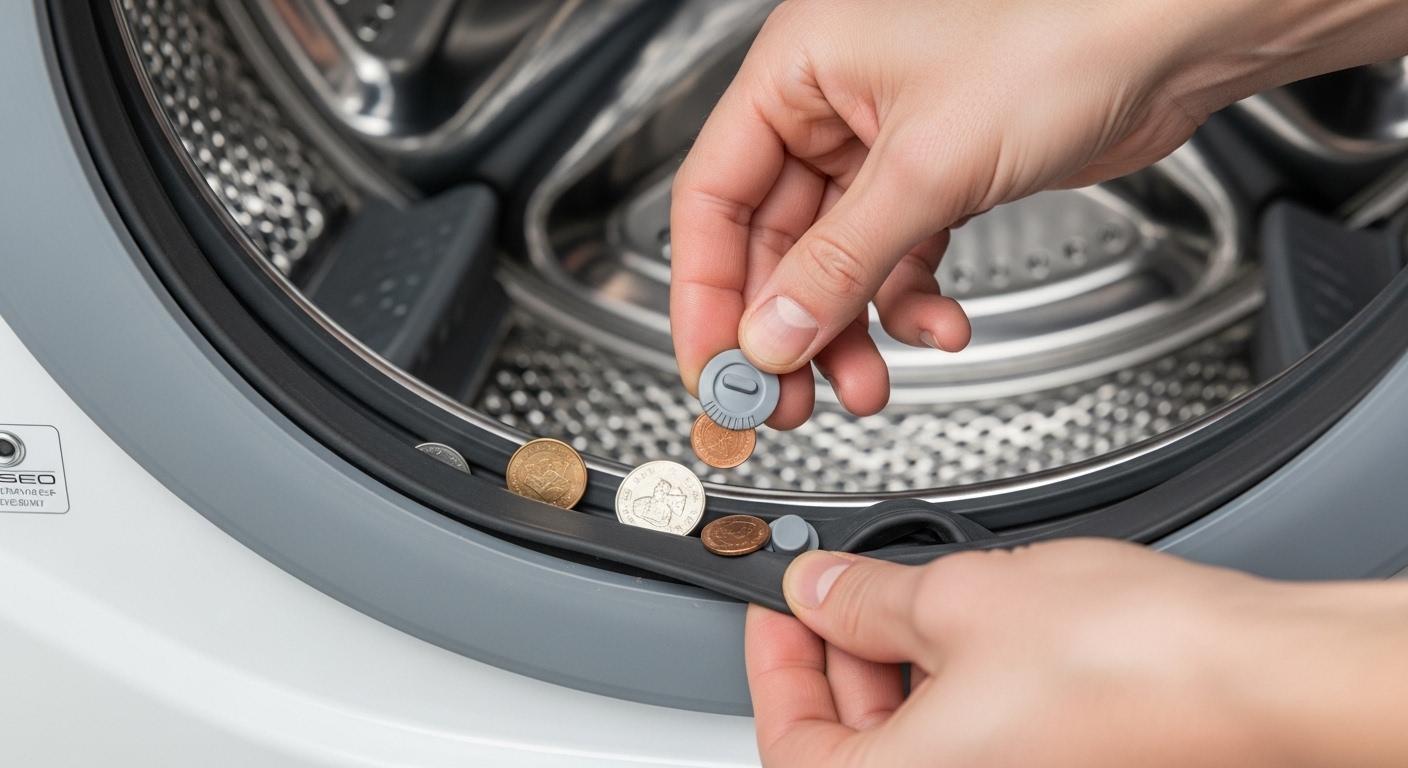
Starting with the heavy hitters in noise production, washing machines are notorious for developing mysterious sounds that can range from subtle clicks to full-blown percussion performances. Most washing machine noises stem from unbalanced loads, worn-out drum bearings, or objects caught in the drum. I learned this the hard way when my machine started sounding like a maraca band – turns out my nephew had left a handful of toy cars in his pockets, and they were having their own little rave in there during the spin cycle.
Dishwashers present their own unique symphony of potential problems. That grinding noise you’re hearing might be food debris caught in the chopper assembly, while whistling sounds often indicate water pressure issues or worn seals. Refrigerators, meanwhile, can develop compressor noises, fan motor issues, or that particularly annoying buzzing that seems to happen exclusively at 2 AM when you’re trying to sleep.
Diagnostic Techniques for Noise Troubleshooting
Moving from identifying the sounds to actually figuring out what’s causing them requires a bit of systematic detective work. Don’t worry – you don’t need a engineering degree for this, just some patience and a methodical approach that’ll save you from unnecessary repair calls.
Safety Considerations During Diagnosis
Before you start poking around inside your appliances, let’s talk safety because nobody wants to turn a simple noise issue into a trip to the emergency room. Always disconnect power before investigating any electrical appliance – unplug it or turn off the circuit breaker.
Quick Fixes and Immediate Solutions
After you’ve done your detective work and identified the potential source of the noise, there are several quick fixes you can try before calling in professional help. For washing machines making excessive noise, start with load balancing. Redistribute clothes evenly in the drum, and make sure you’re not overloading the machine. Check that the machine is level – adjust the feet if necessary.
Prevention and Maintenance Strategies
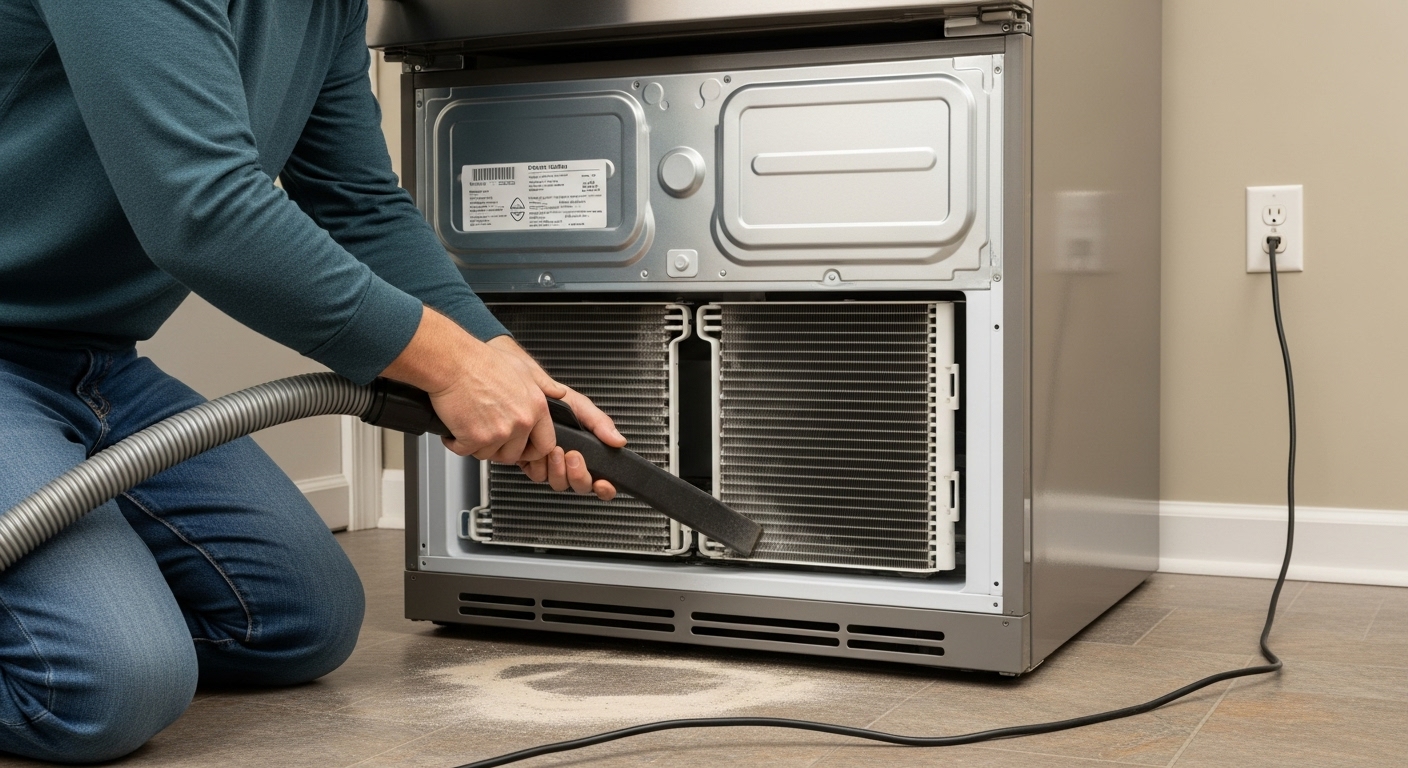
The best way to deal with appliance noise is to prevent it from happening in the first place, and that means developing some solid maintenance habits that’ll keep your machines running smoothly and quietly for years to come. Regular cleaning schedules are your first line of defense against noisy appliances. Clean your dishwasher filter monthly, vacuum your refrigerator coils quarterly, and don’t forget about those often-overlooked areas like washing machine door seals.
Frequently Asked Questions
What noise level should I be concerned about from my appliances?
According to noise pollution research, you should pay attention when appliance noise consistently exceeds 55 decibels, especially during extended use periods. If your appliance suddenly becomes noticeably louder than usual, that’s a clear sign something needs attention.
Wrapping Up
Dealing with noisy appliances doesn’t have to drive you crazy or drain your bank account. When you need expert appliance repair services in Burnaby, Top Appliance Repair Burnaby is here to help restore peace and quiet to your home.