Appliance Energy Efficiency: Burnaby Home Electricity Bills
Frustrated by those ever-climbing Burnaby electricity bills and wondering if your appliances are secretly draining your bank account? The truth is, most homeowners have no idea their aging refrigerator, inefficient washer, or old heating system could be costing them hundreds – even thousands – of dollars annually in unnecessary energy costs.
Picture this: you open your latest BC Hydro bill and do a double-take at the number staring back at you. Sound familiar? If you’re like most Burnaby homeowners, you’re probably scratching your head wondering where all that electricity went. The culprit might be hiding in plain sight – those trusty appliances that have been faithfully serving your family for years.
Here’s the thing about appliance energy efficiency in Burnaby: it’s not just about saving a few bucks here and there. We’re talking about serious money that could stay in your pocket instead of disappearing into inefficient machines that are working way harder than they need to. With Burnaby’s unique climate challenges and BC Hydro’s evolving rate structures, understanding how your appliances impact your electricity bills has never been more important.
Key Outtakes:
- Burnaby buildings generate 39% of the city’s total greenhouse gas emissions, making energy-efficient appliances crucial for both environmental and financial benefits
- Modern Energy Star appliances can reduce electricity consumption by 15-30% compared to standard models, translating to hundreds in annual savings
- Heat pump technology offers 50-70% energy savings compared to electric baseboards, with substantial rebates available through CleanBC programs
- Simple appliance maintenance and usage adjustments can immediately reduce energy costs without requiring major purchases
- Burnaby residents have access to free energy coaching services and up to $44,900 in rebates for comprehensive home energy upgrades
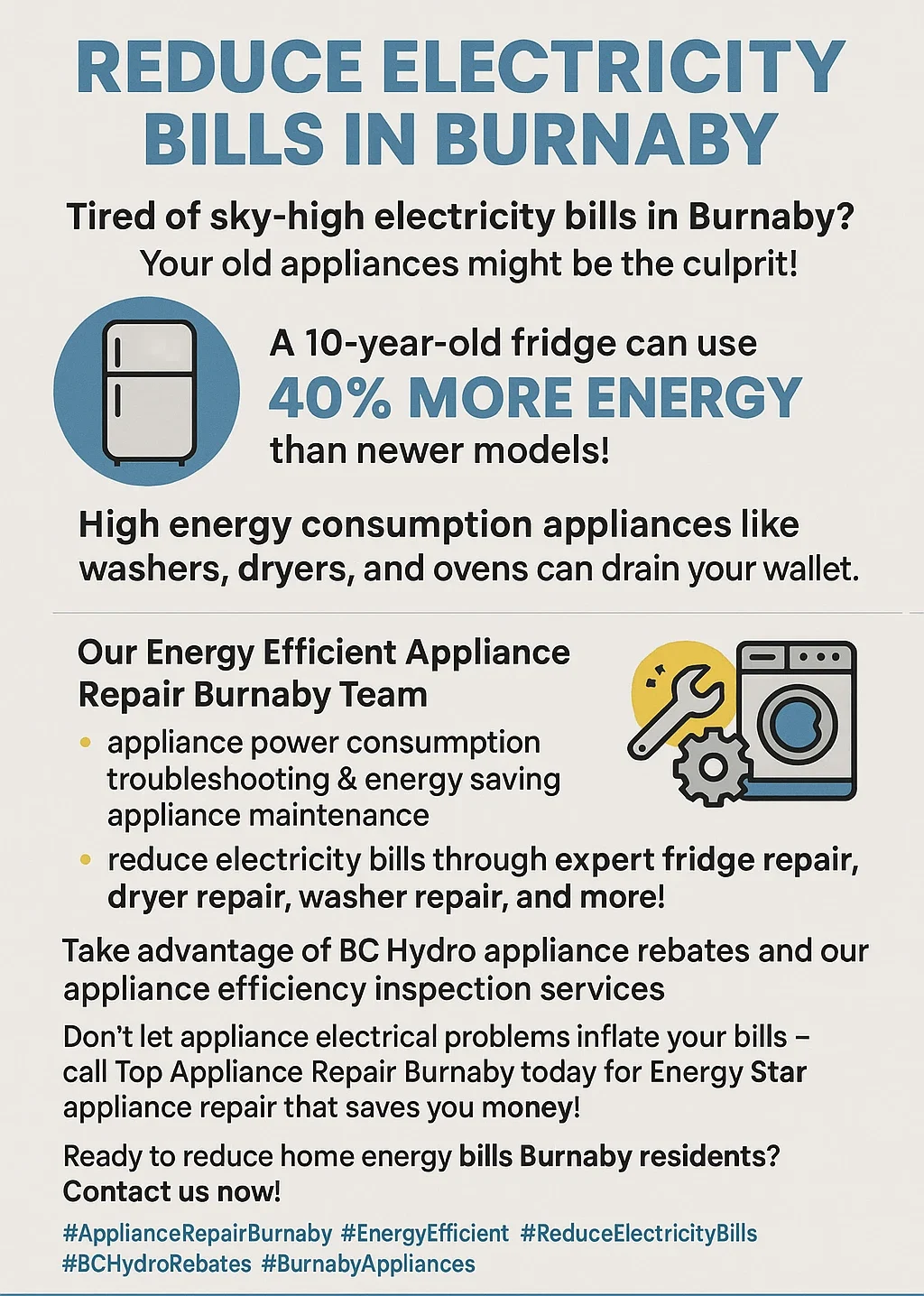
Understanding Energy Efficiency Impact on Burnaby Households
When we talk about energy efficiency in Burnaby homes, we’re dealing with some pretty eye-opening statistics that hit right where it hurts – your wallet. Buildings in our city account for a whopping 39% of total greenhouse gas emissions, making them the largest single source of emissions citywide. But here’s what really matters to you as a homeowner: most of the energy consumed in our homes powers space and water heating systems, accounting for 85% of all energy used and 77% of carbon emissions from buildings.
The reality is that most buildings in Burnaby are between 10 and 70 years old, and the majority weren’t originally constructed with energy efficiency in mind. This means your home might be working against you when it comes to keeping those electricity bills reasonable. Your appliances are constantly fighting an uphill battle against poor insulation, drafty windows, and heating systems that weren’t designed for efficiency.
What makes this particularly challenging for Burnaby residents is our coastal climate. The combination of wet winters and varying temperatures throughout the year puts extra stress on heating and cooling systems, forcing them to work harder and consume more energy than they would in more stable climates. When you factor in humidity levels that can affect everything from your refrigerator’s efficiency to how hard your dryer has to work, you start to see why appliance energy efficiency becomes such a critical factor in managing household expenses.
Major Appliances and Their Energy Consumption Patterns
Understanding which appliances are the biggest energy consumers in your Burnaby home is the first step toward taking control of your electricity bills. The numbers might surprise you, especially when you realize how much money you could be saving with some strategic upgrades and behavioral changes.
Your heating and cooling systems are by far the largest energy consumers in most homes, typically accounting for up to 43% of your total electricity usage. In Burnaby’s climate, this translates to your heat pump, electric baseboards, or air conditioning working overtime during our wet winters and unexpected heat waves. A simple adjustment like keeping your thermostat at 20°C instead of 22°C can reduce heating costs by approximately 5% per degree, which adds up to real savings over our long heating season.
Water heating represents another massive chunk of your energy consumption, using anywhere from 14-25% of your household electricity. Traditional tank water heaters are constantly maintaining hot water temperature whether you’re using it or not, while older models can be particularly inefficient. Recent government initiatives have focused heavily on promoting heat pump water heaters, which can cut water heating costs by approximately 50% compared to conventional electric units.
Refrigeration and Food Storage
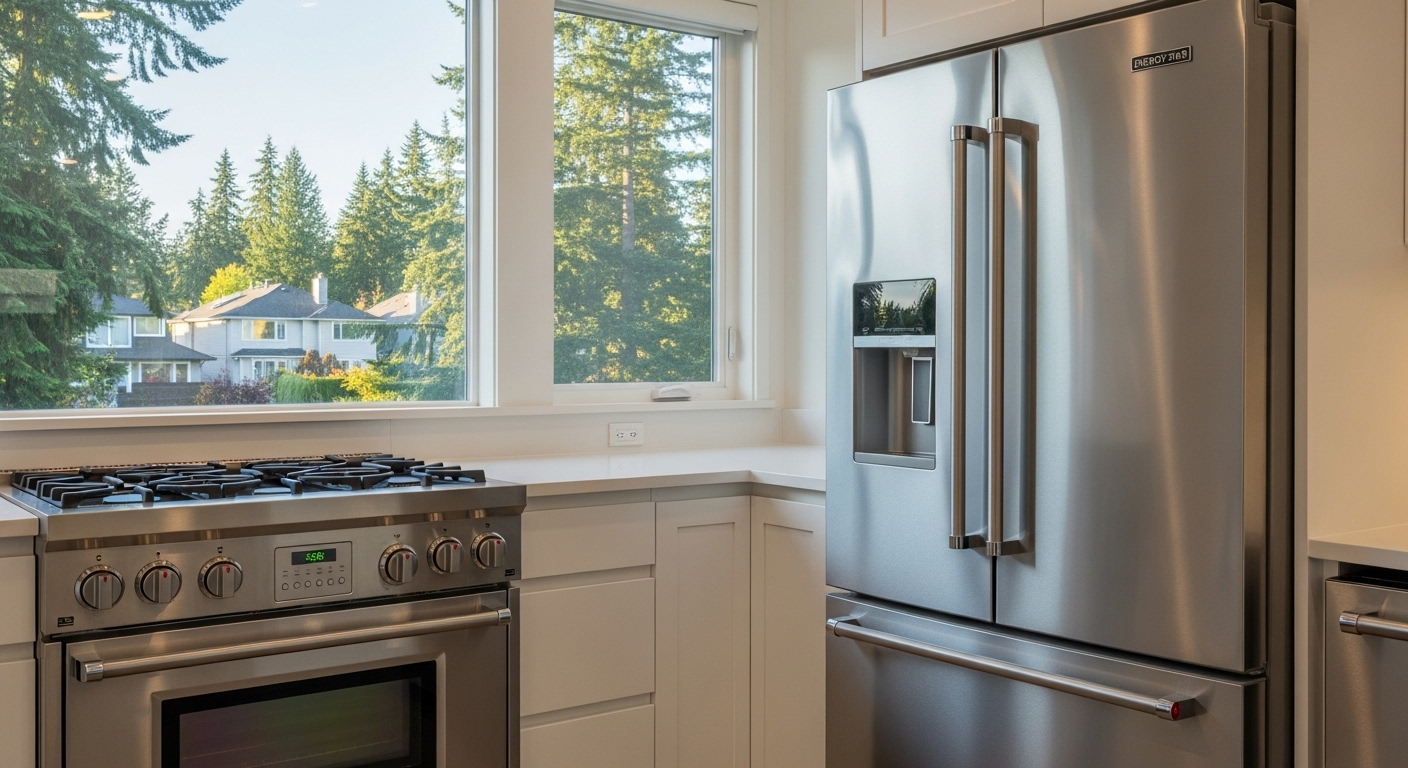
Your refrigerator runs 24/7, making it one of the most significant contributors to your baseline electricity consumption. Older refrigerators from the 1990s can cost over $84 annually to operate, compared to around $55 for modern Energy Star models – that’s nearly $30 per year difference for just one appliance. When you consider that many Burnaby homes have additional freezers in basements or garages, these costs multiply quickly.
The key factors affecting refrigerator efficiency include door seal integrity, appropriate temperature settings, and regular maintenance like coil cleaning. Setting your fridge between 1.7 to 3.3°C and your freezer between -16 and -18°C ensures optimal efficiency without compromising food safety. Regular defrosting of manual-defrost units and keeping door seals airtight can prevent your refrigerator from working overtime to maintain proper temperatures.
Laundry and Dishwashing
Clothes dryers might only represent about 3.2% of overall home energy consumption nationally, but in Burnaby’s wet climate, they become essential rather than optional for much of the year. Most dryers consume between 1,800-5,000 watts during operation, with typical cycles using around 2,250-3,000 watt-hours per load. For families who can’t rely on outdoor drying for several months each year, these costs add up significantly.
Dishwashers are actually one of your most energy-efficient appliances when used properly, often consuming less energy than washing dishes by hand with hot water. The key is running full loads and using energy-efficient settings that may take longer but use lower temperatures. Modern dishwashers with soil sensors actually work better when you don’t pre-rinse heavily – the sensors need to detect food particles to run appropriate cycles.
Energy Star Certification and Efficiency Standards
When shopping for new appliances in Burnaby, the Energy Star symbol isn’t just a nice-to-have feature – it’s your roadmap to significant long-term savings. Energy Star certified products are tested to strict efficiency standards and must perform 15-30% more efficiently than standard models without compromising performance in any way. This certification process involves independent third-party testing, so you can trust that the efficiency claims are legitimate.
The “Energy Star Most Efficient” designation goes even further, identifying the absolute best performers in each category – essentially the top energy performers in their class. These products represent the cutting edge of efficiency technology and often incorporate advanced features like variable-speed motors, improved insulation, and smart controls that optimize energy usage based on actual demand rather than running at full capacity all the time.
For Burnaby homeowners, choosing Energy Star appliances becomes even more valuable when you consider our local utility rates and climate conditions. Energy Star products are specifically designed to maintain their efficiency ratings under varying environmental conditions, which matters when you’re dealing with our coastal humidity and temperature fluctuations that can stress standard appliances.
Understanding EnerGuide Labels
Beyond the Energy Star symbol, EnerGuide labels provide detailed energy consumption information that helps you compare similar models and calculate potential operating costs. These labels show annual energy consumption in kilowatt-hours, allowing you to multiply by your current electricity rate to estimate yearly operating costs. This information becomes crucial when you’re weighing the higher upfront cost of efficient models against long-term operational savings.
When comparing appliances using EnerGuide labels, pay attention to capacity ratings as well as efficiency numbers. A larger, more efficient model might use slightly more total energy than a smaller, less efficient one, but provide better value when you calculate energy use per unit of capacity. This is particularly important for refrigerators, where a more efficient large model often costs less to operate per cubic foot than a smaller, older unit.
Heat Pump Technology and Heating Efficiency
Heat pumps represent one of the most significant opportunities for Burnaby homeowners to dramatically reduce their energy consumption and electricity bills. These systems work by moving heat rather than generating it, making them incredibly efficient for both heating and cooling applications. In our coastal climate, modern heat pumps can deliver 50-70% energy savings compared to electric baseboard heating while providing superior comfort control.
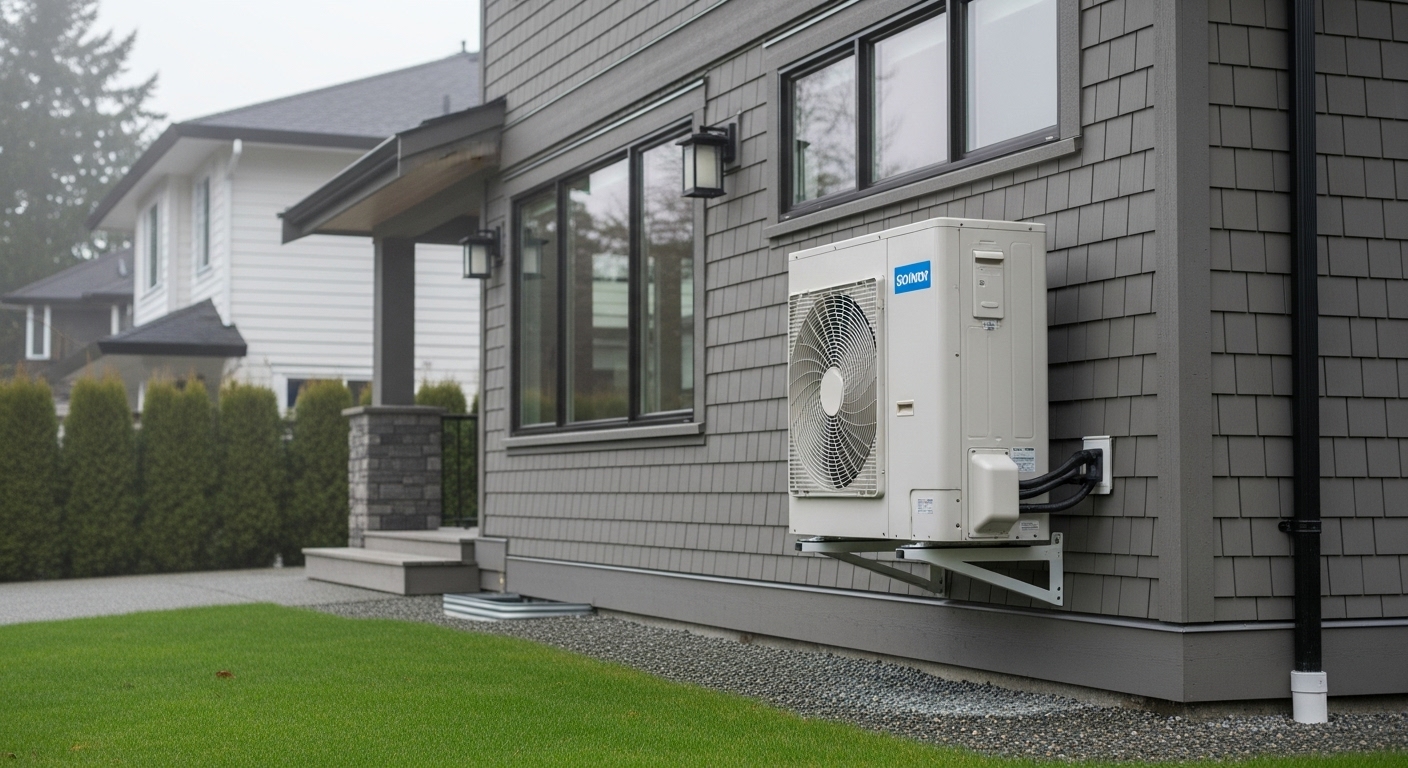
The technology works through a cycle of compression and expansion of refrigerant, transferring heat from outside air to inside your home during winter, and reversing the process for cooling in summer. Many heat pumps also provide dehumidification and air filtration, which becomes particularly valuable during Burnaby’s wildfire season when indoor air quality management is crucial for health and comfort.
What makes heat pumps especially attractive for Burnaby residents right now is the substantial rebate support available through various government programs. CleanBC Better Homes offers up to $14,000 for improving home energy efficiency through selected upgrades, with heat pumps being a priority technology. The CleanBC Energy Saving Program provides enhanced rebates to eligible residents, making these high-efficiency systems more affordable than ever.
Installation and Performance Considerations
Proper sizing and installation are critical for heat pump performance in Burnaby’s climate. Your system needs to be capable of maintaining comfortable temperatures at -5°C without relying heavily on backup electric resistance heating. This requires careful load calculations and professional installation through qualified contractors who understand local climate challenges and building characteristics.
BC Hydro’s Home Performance Contractor Network ensures that installations meet high standards for quality and performance. These contractors understand the specific requirements for heat pump systems in coastal environments and can help you select the right capacity and features for your home’s unique needs. Professional installation also ensures you qualify for available rebates and warranty protection.
Available Rebates and Financial Support Programs
Burnaby residents have access to an impressive array of rebate programs and financial support that can dramatically reduce the cost of energy-efficient appliance upgrades. Understanding these programs and how they work together can turn major home improvements from budget-busting expenses into smart financial investments that pay for themselves through energy savings.
The CleanBC Better Homes and Home Renovation Rebate Program offers eligible residents up to $14,000 for improving home energy efficiency through selected upgrades, with rebate amounts varying depending on the type of improvements you choose. This program works in conjunction with the CleanBC Energy Saving Program, which provides enhanced rebates to eligible residents based on household income levels.
For comprehensive upgrades, the Canada Greener Home Initiative offers interest-free financing options that let you spread the cost of major improvements over time while immediately benefiting from energy savings. The loan amounts are based on the scale and value of proposed upgrades, making it possible to tackle multiple efficiency improvements simultaneously for maximum impact.
Income-Qualified Enhanced Support
The CleanBC Energy Saving Program provides particularly generous support for income-qualified households, with rebates that can reach up to $44,900 per household for comprehensive energy efficiency upgrades. This program recognizes that energy efficiency shouldn’t be a luxury available only to high-income households, and the income thresholds are designed to help middle-income families access these benefits.
Specialized programs like the Strata Energy Advisor (SEA) Program offer free, one-on-one support specifically for condominium and townhome owners who face unique challenges in coordinating efficiency upgrades. The program provides customized retrofit plans and helps navigate the complexities of strata decision-making for building-wide improvements that benefit all residents.
Professional Energy Coaching Support
Free Energy Coach services are available through the CleanBC Better Homes program, providing expert guidance on rebate programs and home upgrades. These coaches offer services in multiple languages including Cantonese, Mandarin, Punjabi, and Farsi, ensuring that language barriers don’t prevent access to energy efficiency support. The coaches can help you navigate the various rebate programs, understand which upgrades will provide the best return on investment for your specific situation, and coordinate timing to maximize available incentives.
Frequently Asked Questions
How much can I realistically save by upgrading to energy-efficient appliances?
The savings potential varies significantly based on the age and condition of your current appliances, but most Burnaby homeowners can expect to reduce their electricity bills by 15-30% through strategic appliance upgrades. For an average household spending $1,500 annually on electricity, this translates to $225-450 in yearly savings. When you factor in available rebates that can cover 30-70% of upgrade costs, many efficient appliances pay for themselves within 3-7 years through energy savings alone.
Heat pump installations typically deliver the largest savings, often reducing heating and cooling costs by 50-70% compared to electric baseboard systems. Combined with substantial government rebates, heat pumps frequently provide the fastest payback of any efficiency upgrade available to Burnaby residents.
Which appliances should I prioritize for replacement to get the biggest impact on my electricity bill?
Start with your heating system if you’re still using electric baseboards or an aging heat pump – this typically offers the largest potential savings. Next, focus on your water heater, especially if it’s over 10 years old, as water heating accounts for 14-25% of most households’ electricity consumption. Refrigerators and freezers should be your third priority, particularly if they’re over 15 years old, since they run continuously and efficiency improvements compound over time.
Don’t overlook your clothes dryer if you live in a household that does multiple loads weekly – upgrading to a heat pump dryer can reduce drying energy consumption by 50% or more, which matters significantly during Burnaby’s long wet season when outdoor drying isn’t practical.
Are the government rebates worth the hassle of paperwork and requirements?
Absolutely. The current rebate programs can cover 30-70% of your upgrade costs, turning major efficiency improvements into manageable investments with excellent returns. The CleanBC programs have streamlined their application processes significantly, and free Energy Coach services can guide you through the paperwork and requirements. For many upgrades, the rebates are so substantial that the after-rebate cost of an efficient appliance is often comparable to or even less than a standard efficiency model.
The key is working with qualified contractors and understanding the requirements upfront. Most rebate programs require professional installation and specific efficiency ratings, but these requirements actually protect you by ensuring proper installation and verified performance.
Wrapping Up
Managing your Burnaby home’s electricity costs through appliance energy efficiency isn’t just about saving money – it’s about taking control of one of your largest household expenses while contributing to our community’s environmental goals. With buildings accounting for 39% of Burnaby’s greenhouse gas emissions and energy costs continuing to rise, the combination of efficient appliances, available rebates, and professional support creates an unprecedented opportunity to dramatically reduce your electricity bills.
When your aging appliances start showing signs of wear or your electricity bills climb higher than comfortable, don’t just think repair versus replace – think about the long-term energy costs and available incentives that can make efficient upgrades surprisingly affordable. At Top Appliance Repair Burnaby, we help homeowners navigate these decisions by providing honest assessments of when repairs make sense versus when replacement with efficient models delivers better value, and we can connect you with qualified contractors for rebate-eligible installations that maximize your savings potential.